GPS and Headlamps: Rechargeable Batteries vs. Alkalines
Author: Mark R. Vance|Release date: May 9, 2026 |Reading time: 12–14 minutes
Author Background: Mark R. Vance writes about hiking equipment, backpacking systems, and mountain safety practices. His work focuses on how gear performs in real-world trail conditions, especially on long-distance routes, rocky terrain, and cold-weather hikes. Rather than concentrating on product marketing, he analyzes practical trade-offs involving weight, durability, comfort, and reliability. His articles often explore footwear systems, layering strategies, navigation tools, and emergency preparedness for independent hikers. Drawing from years of trekking experience and outdoor research, he aims to explain technical outdoor topics in a clear and accessible way for both newer hikers and experienced backpackers.
The core dilemma — reliability, cost, and weight pull in different directions
Before any multi-day hike, there’s a decision that quietly shapes almost everything about your trip. But it rarely gets dissected in detail. What are you going to use to power your GPS and headlamp?
This isn’t just “lithium or alkaline, which is better?” In the mountains, where the temperature can drop from mild to well below freezing in a single night, batteries aren’t accessories. They’re part of your safety system — tied directly to navigation and your ability to move after dark.
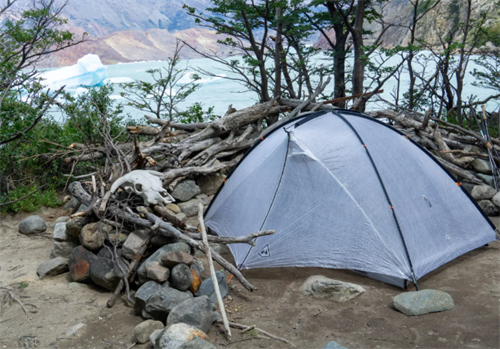
Power strategies look wildly different from one route to the next. Someone hopping between huts on the Tour du Mont Blanc has a totally different charging reality than someone deep in the Alaska Range, or walking a remote Patagonia traverse. One person can plug into a wall outlet every other day. Another needs to be self-sufficient for two weeks. Those conditions don’t just favor different battery types. They demand completely different ways of thinking about resupply, weight, and risk.
The real differences — understanding performance at the chemical level
Voltage curves, and why “full” doesn’t always mean “safe”
How voltage drops during discharge matters more than the capacity number on the label. A lot more. Garmin’s own handheld GPS manuals point out that remaining battery estimates are way less accurate with alkaline cells compared to lithium or NiMH. Why? Because alkaline voltage just keeps sagging as the battery empties, and that confuses the fuel gauge algorithm.
Rechargeable lithium-ion cells sit at a nominal 3.7 volts. For most of the discharge cycle, the voltage barely budges. The power delivered to the device stays steady until the cell is almost completely drained. For the positioning chips in a modern multi-band GPS, or a headlamp running a constant-current driver, that kind of stability is about as good as it gets.
Alkalines? Different story. The 1.5-volt label looks fine on paper, especially in low-drain gadgets. But apply a moderate load — say, continuous GPS tracking with the screen on — and the picture shifts. Energizer’s datasheet for AA alkalines shows that under a 500 mA constant drain, voltage drops off noticeably well before the halfway point of the discharge. The usable energy ends up being a lot less than the label suggests. On a trail, where you might be running tracking for hours, that’s exactly the scenario that exposes alkaline weaknesses.
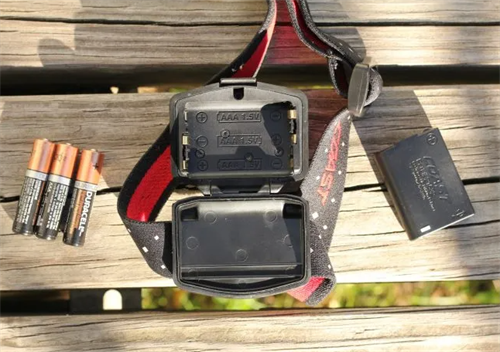
NiMH rechargeables land somewhere in between. The 1.2-volt nominal number seems low, but the voltage is surprisingly flat through the middle part of the discharge. For headlamps, this has an annoying practical wrinkle. Older models designed around alkaline voltage can trigger their low-battery warning early when you run NiMH cells, because the threshold got set too high. Most newer headlamps have sorted this out. Still, you can’t assume universal compatibility. Test it before you leave.
When cold hits — a freeze frame for battery chemistry
Cold and batteries follow basic chemical rules. Research from the Clean Energy Institute at the University of Washington notes that low temperatures reduce the ionic conductivity of the electrolyte, and this effect beats up alkaline systems the hardest. By the time you hit -18°C (0°F), a typical alkaline cell can deliver only a fraction of its room-temperature capacity — and even then, only at very low current draw. For anyone on a winter traverse, a glacier route, or an early-season alpine trip, this isn’t abstract. It’s a headlamp that fades to useless right when you need it, or a GPS that shuts off with very little warning.
Lithium chemistries do noticeably better in the cold. Multiple third-party tests back this up. Energizer’s Ultimate Lithium datasheet shows cells retaining usable capacity at -20°C, with voltage sag that’s fairly contained. Rechargeable lithium-ion cells are similar, though the exact numbers depend on the specific cell and manufacturer. Don’t assume all lithium is equal — check the published specs.
One nuance worth mentioning: some of the capacity lost to cold comes back when the battery warms up. That’s academically comforting, but in the backcountry, it doesn’t help much. You need performance right now, not later. A battery that springs back to life inside the hut has already failed you on the pass. For trip planning, the direct cold-weather numbers are what count, not the recovery curve.
NiMH slots between lithium and alkaline on this front. Testing by the U.S. National Renewable Energy Lab found that standard NiMH cells at around -10°C lost something like 30 to 40 percent of their room-temperature capacity. That stings. But it’s still a world better than what alkalines manage in the same conditions.
Stuff that matters beyond the spec sheet
The resupply question — where does your power actually come from?
Whether a rechargeable system makes sense on your trip has very little to do with environmental virtue. It all hinges on one brutally practical variable: how often you’ll have access to an outlet.
On the Tour du Mont Blanc, with its dense net of huts and villages, charging gaps are rarely more than two days. In that setting, a rechargeable ecosystem — NiMH or lithium-ion plus a charger — works beautifully. But once you’re more than five days out and truly off-grid, the math flips. Backpacking Light has looked at the weight trade-offs. When you add up the solar panel, the power bank, and the multi-port charger, a rechargeable kit can approach the weight of carrying equivalent energy in single-use lithium cells. Latitude and weather shift that equation, of course. You need to run the numbers for your specific destination.
And then there’s the one thing alkalines do that nothing else can match: universal availability. In a tiny village shop in Patagonia, a roadside kiosk in the Alps, a remote trading post in Alaska — AA and AAA alkalines are almost always on the shelf. No other battery standard has that kind of global reach. If a trip runs longer than planned, or a piece of gear suddenly drains faster than expected, the ability to walk into any shop and buy more power is a form of resilience that no lab test can really measure.
Leakage — the slow killer of your expensive gear
Battery leakage gets talked about constantly in outdoor circles, but it rarely gets analyzed in a cold, systematic way. Energizer’s battery safety information states plainly that under certain conditions — mixing old and new cells, or over-discharging — internal pressure can build inside an alkaline cell and push potassium hydroxide electrolyte out through the seals. That stuff eats metal contacts. It can also wick along wires into the circuit board itself.
Germany’s Outdoor Magazin, in a piece on gear maintenance, pointed out that battery compartment design can limit the damage but can’t eliminate the risk. Even with sealed terminals, rapid temperature swings and high humidity — standard mountain conditions — can create pressure differences that drive electrolyte through microscopic pathways. In the field, where the temperature can swing thirty degrees between day and night and condensation is a nightly event, those conditions show up every single day.
Lithium-based systems have a much lower intrinsic leakage probability. The cells use a non-liquid electrolyte in a wound structure. Their failure modes don’t look anything like the classic alkaline leak. NiMH cells are similarly low-risk.
What does this mean in practice? If you’re running expensive electronics — a GPS that cost several hundred dollars, a headlamp you really depend on — and you keep feeding them alkalines, you’re accepting a slow, cumulative risk of long-term damage. Might not happen this trip. Might not happen next year. But the odds stack.
A layered power system — mixing battery types on purpose
No single battery type wins everywhere. That’s the honest conclusion. A smarter approach is to build a layered power setup, matched to how critical each device is and the environment you’ll be in.
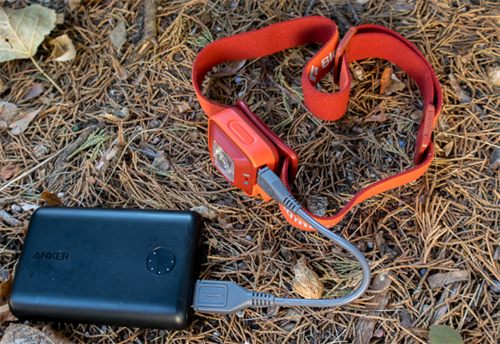
For GPS units and headlamps that charge via USB and have a sealed lithium-ion pack inside, the battery was matched to the device by the manufacturer. Garmin’s approach in the GPSMAP 67 series is a typical example: the sealed lithium module gets you better waterproofing and dust protection than a removable battery bay ever could. When you choose that kind of device, you’re trading away the ability to swap cells in the field for a more integrated, compact design. The key prep step isn’t buying spares — it’s nailing down your daily power consumption on a shakedown hike, so you know whether you need a supplementary power bank or not.
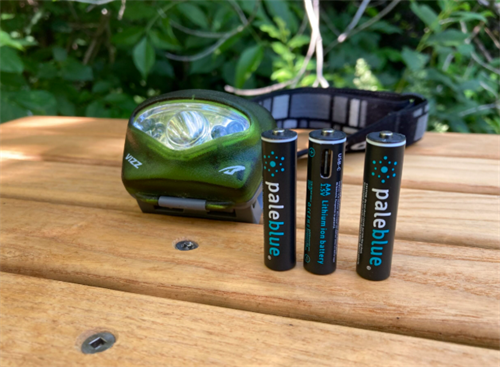
For gear that runs on standard AA or AAA slots, the evidence from industry testing and independent labs leans heavily toward using NiMH rechargeables as your daily workhorse. Panasonic’s Eneloop Pro and IKEA’s LADDA series keep coming up in tests as a solid balance between low self-discharge and cycle life. NiMH cells also have lower internal resistance than alkalines, which helps them hold voltage steadier under the moderate current loads that headlamps and GPS receivers pull. That means more consistent brightness and fewer random shutdowns.
Now, the emergency backup. This is the battery you hope to never touch but absolutely want buried at the bottom of your pack. Single-use lithium iron disulfide cells — Energizer Ultimate Lithium being the most widely available reference — have clear advantages in the numbers that matter for a backup: low-temperature performance, and shelf life. The datasheet claims twenty-year storage at room temperature. Kept in a sealed dry bag inside your pack, self-discharge is effectively zero for any reasonable trip length. That makes them a much more reliable emergency option than alkalines, which can lose a measurable chunk of their charge in just a few weeks sitting in less-than-ideal conditions.
A few stubborn myths
Myth 1: Higher-capacity NiMH cells are always the better pick.
NiMH cells come in two flavors. High-capacity versions are rated around 2500 to 2800 mAh. The lower-capacity “low self-discharge” versions sit in the 1900 to 2100 mAh range. When Eneloop launched, it made this distinction something people actually talked about. The trade-off is real: high-capacity cells lose more charge just sitting on the shelf. If your trips are spaced weeks or months apart, your “high-capacity” cells might deliver less usable energy when you finally hit the trail. For the weekend-and-holiday hiker, that’s a pretty important detail to know.
Myth 2: In extreme cold, take the batteries out and put them in an inner pocket — they’ll work like normal again.
It helps a little. Keeping batteries close to your body slows further temperature loss. It does not reverse the chemical slowdown that already happened inside a cold-soaked cell. And there’s a sneaky problem people don’t think about. Bring a very cold battery into a warm, humid tent or jacket pocket, and condensation forms. Moisture collecting on terminals and circuitry creates its own kind of slow-motion damage, especially in damp winter hut conditions. Sometimes the fix turns out to have its own headache.
Myth 3: Mixing old and new batteries isn’t a big deal.
It absolutely is. Put a partially drained cell in series with a fresh one, and the weaker cell hits the bottom sooner. Keep drawing current, and it can get driven into reverse charging. That pressurizes the cell and makes leakage dramatically more likely. This isn’t a theoretical edge case — it’s the number one reason people find crusty, corroded battery compartments when they pull a headlamp out of storage. Just don’t mix them.
References
1. Cadex Electronics. Battery University. BU-502: Discharging at High and Low Temperatures. Covers the fundamentals and measured data on capacity fade across different battery chemistries at low temperatures.
2. Energizer Holdings, Inc. Energizer L91 Ultimate Lithium Technical Datasheet. Provides performance curves for lithium iron disulfide cells under low temperature and high drain conditions, along with stated shelf life data.
3.Panasonic Corporation. Nickel Metal Hydride Handbook. A systematic technical reference on voltage characteristics, self-discharge behavior, and cycle life of NiMH batteries.
4.National Renewable Energy Laboratory (NREL). Battery Thermal Management and Low Temperature Performance Analysis. Compares usable capacity and power output of different battery chemistries in sub-zero operating conditions.
5. Backpacking Light. “The Weight and Energy Trade-offs of Backcountry Electronics Power Systems.” Analyzes the practical weight and resupply trade-offs between rechargeable and single-use battery systems across various trip lengths.
Disclaimer
The technical information and analysis here are based on publicly available manufacturer data and engineering research. Real-world gear performance depends on environmental conditions, product variation, and how equipment is actually used. You should test your power setup thoroughly under conditions similar to your planned trip. For any battery safety instructions, follow the manufacturer’s official guidance. The author and publisher assume no liability for equipment damage, personal injury, or interrupted trips resulting from applying the information in this article.
Recommend for you:

Mountain Loop Fastpacking: Trail Runners vs. Hiking Boots
Fastpacking a mountain loop—whether you're cranking out huge miles and vert in a single day, or moving light over two to four days—puts your footwear in a weird bind.
Dientes de Navarino Circuit: A Wilderness Trek at the End of the World
The route is a loop across the island’s jagged mountain spine. It measures roughly 53 to 54 kilometres, a figure confirmed by the official leaflet from Chile’s Ministry of National Assets and the independently produced Kanaska Maps project.
Valbona–Theth Hiking Trail: Albania’s Most Scenic Single-Day Trek?
In the last few years, Albania’s “Accursed Mountains” have started showing up more often in hiking conversations.
First Hikers Using Starlink: What High-Speed Internet Does to the Wilderness Experience
In June 2024, SpaceX launched the Starlink Mini. It weighs 1.1 kg (2.43 lbs), according to SpaceX’s official specifications page, or 1.53 kg (3.37 lbs) with its 15-meter DC power cable and kickstand—and it fits in a backpack.