Mountain Loop Fastpacking: Trail Runners vs. Hiking Boots
By Mark R. Vance |Release date: May 9, 2026 |Reading time: 11–13 minutes
Author Background: Mark R. Vance writes about hiking equipment, backpacking systems, and mountain safety practices. His work focuses on how gear performs in real-world trail conditions, especially on long-distance routes, rocky terrain, and cold-weather hikes. Rather than concentrating on product marketing, he analyzes practical trade-offs involving weight, durability, comfort, and reliability. His articles often explore footwear systems, layering strategies, navigation tools, and emergency preparedness for independent hikers. Drawing from years of trekking experience and outdoor research, he aims to explain technical outdoor topics in a clear and accessible way for both newer hikers and experienced backpackers.
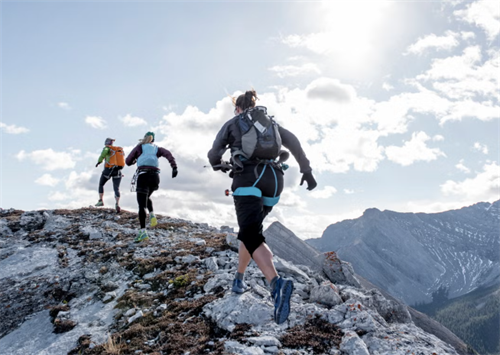
Fastpacking a mountain loop—whether you're cranking out huge miles and vert in a single day, or moving light over two to four days—puts your footwear in a weird bind.
You want the agility and ground feel of a running shoe. But you also need real protection and support. Traditional hiking boots are naturally clumsy in the agility department. Trail runners, by design, were never meant to be fortresses for your feet.
Over the past decade, plenty of long-distance hikers in Europe and North America have switched to trail runners. That trend is real. But a fastpacking loop isn't a thru-hike. On a single day you might go from smooth hardpack to loose scree, with a creek crossing somewhere in the middle. Copy-pasting someone else's shoe choice can backfire.
This article isn't about picking a winner. It's about sorting through the energy cost, the terrain, ankle safety, blisters, and durability—piece by piece—so you can figure out what makes sense for you.
A heads-up first. Most of the research on hiking footwear comes from ultramarathon studies and injury surveys on long trails. Randomized controlled trials that zoom in on "fastpacking loops" specifically? Almost nonexistent. On top of that, lab conditions, terrain, and test subjects vary so much that the numbers bounce around. So treat the figures here as reference ranges, not a precise forecast of what'll happen to your feet.
Shoe Weight Isn't a Numbers Game—It Rewrites Your Energy Ledger
There's an old backpacker's saying: "A pound on the foot is like five on the back." Put simply, a heavier shoe drains your energy as if you were hauling a bunch of extra weight in your pack. The saying has never been nailed down with rigorous science, but the direction it points is correct. A more solid number comes from the U.S. Army Research Laboratory: researchers there found that for every ounce (about 28 grams) you shave off a shoe, leg fatigue drops by roughly 0.83% (data cited from U.S. Army Research Laboratory footwear studies as referenced in the 2025 Frontiers in Bioengineering and Biotechnology review).
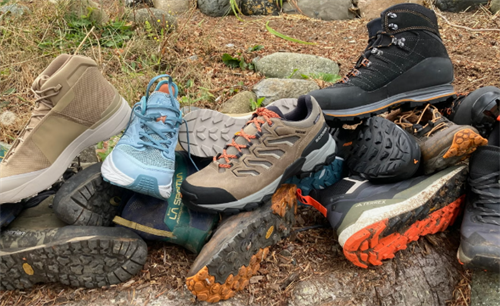
Now look at actual shoes. Take a lightweight, non-waterproof trail runner—the Altra Lone Peak 9+ at 11.55 oz (327.4 g) per shoe in men's size 10.5, per Altra's January 2025 press release. Compare that to the Salomon Quest 4 Gore-Tex boot. REI's product listing for the men's version puts the pair at 2 lb 14.4 oz (1,314 g), or about 23.2 oz per boot. The per-foot difference between these two models comes out to roughly 11.7 oz. That's close to three-quarters of a pound you're swinging around with every single step on each foot.
One group of researchers crunched the calorie numbers: a 180-pound (about 82 kg) hiker burns roughly 98–102 calories per mile in trail runners, versus 115–122 in boots—a gap of roughly 17%. Over ten-plus hours on the trail, that gap adds up. Especially on the downhill home stretch, when tired legs get sloppy and the risk of a stumble quietly climbs.
But shoe weight is only one line in the energy ledger. Cushioning firmness, how easily the sole flexes, and the shape of the midsole all influence fatigue. A slightly heavier boot that grips better and absorbs shock more efficiently might actually save you energy on certain terrain. That's why staring at the scale alone can mislead you.
Terrain Gets a Vote: Different Surfaces Are Choosing for You
The terrain underfoot doesn't just influence comfort. It can override everything else—including weight savings—depending on what you're walking on.
Hardpack and Dry Dirt: Trail Runners' Home Turf
When the path is clear and dry, trail runners shine for straightforward reasons. Their soles are softer, the toe box is wider, and the foot can flex naturally. Mesh uppers breathe well, too—tests have shown the inside of a mesh shoe can stay about 3°C cooler than a leather boot under the same conditions.
Another detail that gets overlooked is toe room. Brands like Altra with their wide FootShape last, or the roomy forefoot of a Hoka Speedgoat, let your toes splay a bit even after hours of swelling. A 2024 survey of 389 Appalachian Trail thru-hikers backs this up: 80% started in trail runners, and by the end, that climbed to 86%, while boot use dropped from 12% to just 6% (The Trek, January 2025).
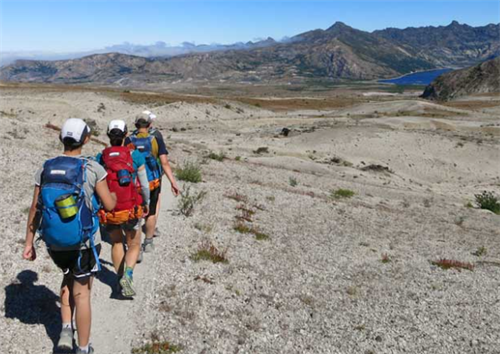
A reality check, though. The AT is mostly well-maintained dirt path. Rocky scrambles and snow are rare. If you transplant those stats straight to a loop in the Rockies or the Alps, the terrain might punch you in the face.
Technical Rock and Scree: Boots Still Have a Seat at the Table
Once you hit loose scree, rocky ledges, or a steep traverse where you need to edge on tiny footholds, the cozy flexibility of a trail runner can suddenly feel sketchy. Hiking boots usually have stiffer outsoles—think Vibram Megagrip compounds—that bite better on small edges and cracks.
The taller collar does something very practical, too: it keeps scree out. Even with low gaiters, low-cut shoes tend to let pebbles sneak in. Once you've got gravel in your shoe, you unconsciously change your gait. That awkward shuffle, after a few miles, turns into hot spots or arch pain.
If your pack weight climbs above 30 pounds (around 14 kg), the boot's stiff sole also provides torsional rigidity that trail runners struggle to match. Fastpacking loops usually encourage keeping total pack weight under 20 pounds. But add camera gear, climbing kit, or extra insulation for cold weather, and your load can creep up. In those cases, the structural advantage of a boot shouldn't be dismissed.
Wet Trails and Creek Crossings: Who's Really Afraid of Water?
Water crossings are where these two shoe categories really diverge—and there's rarely a perfect solution.
Non-waterproof trail runners drain fast. After you wade through, they typically dry in 45–90 minutes (longer if it's cold and windless). Waterproof boots with a membrane? Once water spills over the collar—and it often carries silt—they take forever to dry. We're talking eight to twenty-four hours, sometimes days in damp conditions.
Many experienced hikers who deal with frequent crossings follow a working rule: if you're going to get wet no matter what, wear non-waterproof shoes and let them dry on the move.
But that rule falls apart when the water is brutally cold. Near-freezing meltwater brings hypothermia and frostbite risks that outweigh the convenience of quick drying. In early-season Alpine loops or near the snow line, a Gore-Tex boot does a much better job of keeping feet warm and dry.
A 2024 study published in the International Wound Journal added another dimension. Researchers tracked foot skin hydration in 86 long-distance hikers and found that when moisture levels crossed a specific threshold (above 30.40 a.u. on the right foot, 27.37 a.u. on the left), blister odds jumped significantly—the prediction accuracy was around 80%. The study also noted that women's feet tended to show higher hydration levels and that skin hydration generally decreases with age (Gracia-Sánchez et al., 2024). The takeaway? The "fast-drying shoe" strategy matters even more if you sweat heavily or hike in wet regions.
Ankle Support: The Boot's Trump Card, or an Overhyped Feature?
The idea that a tall collar protects your ankle sounds completely reasonable. But the research paints a more complicated picture.
There's a frequently cited set of numbers claiming boots cut acute ankle injuries by about 22%, but may increase knee and hip overuse injuries by roughly 31%—observed under light loads. The exact source and demographics behind those figures are a bit hazy. However, an independent 2024 study in Scientific Reports offers some mechanical backup. Researchers compared 20 healthy men walking in boots versus casual shoes. In boots, the subtalar joint's work dropped significantly—net concentric work by 42.7%, eccentric mechanical work by 44.6%—while the hip and knee joints compensated by doing extra work (Haghighat et al., 2024). In plain English: the boot restricts the ankle and shifts the impact upstairs.
What this means. If you've got a history of ankle sprains or chronic instability, that stiff external support from a boot has real protective value. But if your ankles are already stable, wearing heavy boots day after day might let the small muscles in your feet weaken over time—use it or lose it—and load up your knees more on long descents. For the intensity of fastpacking loops, that trade-off deserves a hard look.
Another data point: a 2025 thru-hiker survey showed 77% started in trail runners, rising to 87% later on, while boots dropped from 12% to 5% (Kevin Root Medical, January 2026). A bunch of people who picked boots for "support" ended up switching after weeks of blisters, swelling, and altered gait. That suggests many of us overestimate how much support we actually need, and we self-correct based on how our bodies feel.
I need to stress this. Most of this evidence comes from observational surveys. We don't have randomized controlled trials here. Researchers also admit the test subjects skew young—healthy men in their twenties—and sample sizes are small. Self-selection bias can muddy the conclusions. So for now, the best we can say is "it depends on the person." We're a long way from a one-size-fits-all recommendation.
Blisters, Durability, and Cost: What Only Shows Up Over Long Miles
Blisters are a more universal hiking misery than twisted ankles. The 2024 Gracia-Sánchez study found that people who blistered had much higher average foot skin hydration—61.6% versus 38.4% in the non-blister group—and on the left foot this link was statistically significant (p = 0.032). Damp socks pushed skin moisture even higher. The lesson: to minimize blisters, you have to manage shoes, socks, and foot skin together. Don't just pick a shoe and hope for the best.
On durability. Trail runners typically last 400–500 miles. Hiking boots go 800–1,000 miles—roughly twice as long. For most mountain loops—say, the Tour du Mont Blanc at about 105 miles, or the Wonderland Trail at 93 miles—either shoe can handle the trip on a single pair.
The real cost difference shows up if you're doing multi-day loops frequently. One survey found around two-thirds of thru-hikers swap shoes three to five times over a 2,200–2,600 mile trek. Trail runners at 140–140–160 per pair, replaced every 500 miles, do cost more in the long run. But whether that extra expense is worth the energy savings and comfort is a personal equation.
One caution: soles wear down much faster on abrasive granite gravel than on soft forest duff. Your gait, stride, and pack weight also change the math. Estimates from different studies vary widely, so build in some buffer when planning.
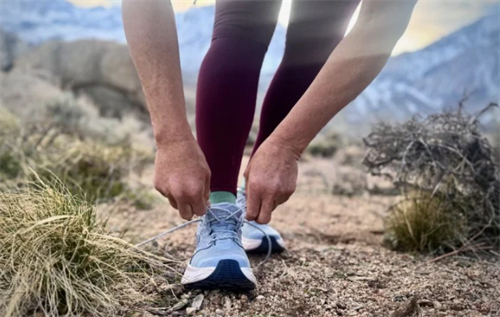
Can You Have It Both Ways? Hybrid Shoes, DIY Hacks, and a Decision Framework
Faced with this dilemma, shoe companies are pushing "hybrid" designs. In April 2026, Nike ACG announced the Zegama Hike—a mid-cut boot that borrows the bouncy midsole of the Zegama trail runner, paired with a Vibram Megagrip outsole. It's scheduled to launch in July 2026. La Sportiva's Prodigio Hike GTX, reviewed by Live For The Outdoors in April 2026, puts a running-shoe midsole geometry into a hiking-boot shell. The North Face's Vectiv line even stuffs a carbon-fiber plate into the sole for a smoother roll while keeping flexibility.
But hybrids aren't perfect. They typically run 400–470 grams per shoe—heavier than a pure trail runner by over 100 grams, but more than 300 grams lighter than a full-on boot. Long-term durability and grip data across multiple seasons are still thin on the ground.
If you're on a budget or prefer a modular approach, here's a DIY 80/20 strategy you can try. Three add-ons:
A rigid insole for arch support and torsional stiffness: Superfeet Carbon (formerly called Run Support Low Arch), listed at 2 oz per insole on Zappos based on size F measurements (men's 11.5–13).
Low-profile gaiters to keep rocks out: Outdoor Research Rocky Mountain Low Gaiters at 4.8 oz per pair (REI product listing).
Waterproof socks for splashes and shallow crossings: Sealskinz Waterproof All-Weather Mid-Length Sock, per-unit weight 97 g (about 3.4 oz) according to the Galaxus product listing.
Together, these three add roughly 7.5 oz (about 213 g) per foot—way less than the extra weight of a boot—and could cover maybe 80% of a boot's core protective functions. Full disclaimer: I'm estimating here. In deep mud or extreme cold, individual pieces might degrade faster than an integrated boot design.
The nice thing about a modular setup is you can pick and choose based on the day's forecast and route. In temperamental mountain weather, that flexibility is worth something.
Conclusion
At the end of the day, choosing between trail runners and hiking boots is deeply personal. The research gives us a set of trade-offs you can actually see—lightweight versus stability, agility versus support, fast-drying versus waterproof—but it doesn't hand us a clear winner.
What's more useful is building your own footwear decision filter. Rank your priorities based on the terrain's steepness, your typical pack weight, and the actual condition of your ankles. Ask yourself three things.
How many sections of this loop will force me to slow down because I'm worried about slipping?
Is my pack weight pushing into territory where a boot's structural support starts to matter?
Have my ankles been injured before, or do they just feel wobbly?
If possible, test a trail-runner setup on short, low-risk outings and gradually learn how much your ankles can adapt. Because in the mountains, the shoes are just tools. The one making the calls, and living with the consequences, is the person wearing them.
FAQ
Q1: Can trail runners really replace hiking boots on a multi-day mountain loop?
It depends on the terrain, your pack weight, and your ankle strength. If the route is mostly well-maintained trail, your pack is under 30 pounds, and your ankles are healthy, trail runners can absolutely handle it. If scree fields and technical scrambling make up a big chunk of the route, the protective structure of boots still matters a lot.
Q2: Is a waterproof membrane mandatory?
Not always. If you'll be wading through water multiple times, non-waterproof shoes that drain and dry fast can be more practical. However, in very cold water or near the snow line, a Gore-Tex boot dramatically cuts the risk of frostbite and hypothermia.
Q3: Are hybrid shoes worth the investment?
If your loops fall into a "medium" terrain category—some technical bits, but not full-on boot territory all day—hybrids are a solid compromise. If your terrain sits at either extreme (all buffed trail or all rough off-trail), a purpose-built shoe might suit you better.
Q4: How can I tell if my ankles are strong enough for trail runners on a big loop?
The safest route is to get a functional assessment from a physical therapist or a foot and ankle specialist. Trying to self-diagnose is risky. Most people don't discover a weakness until after they're injured, not before.
Q5: Do trail runners cause more blisters than hiking boots?
There's not enough evidence to claim that right now. Blisters are common in both types of footwear. More important is whether the shoe allows room for foot swelling, how well your socks wick moisture, and not letting your skin stay soggy for hours on end.
References
[1] Waśkiewicz Z, Akbaś A, Grzywacz T, Borysiuk Z. Footwear technology and biomechanical adaptations in ultramarathon running: a PRISMA-Guided narrative review. Frontiers in Bioengineering and Biotechnology, 2025, Volume 13, Article 1642555.
[2] Haghighat F, Rezaie M, Majlesi M. How boots affect the kinematics and kinetics of lower limb joints during walking compared to casual footwear. Scientific Reports, 2024, 14, Article 18217.
[3] Gracia-Sánchez A, et al. Influence of skin hydration level on the occurrence of blisters on the foot during hiking. International Wound Journal, 2024, 21(12): e70024.
[4] The Trek. The Top Footwear on the Appalachian Trail: 2024 Thru-Hiker Survey. Published January 2025.
[5] Kevin Root Medical. Thru-Hiker Footwear Survey — What It Means for Blisters, Swelling, and ‘Support’. Published January 2026.
Disclaimer
This article offers general information only and does not constitute medical advice, a training prescription, or professional gear guidance. For any foot and ankle health concerns, consult a licensed medical professional. The shoe brands and models mentioned are drawn from publicly available information and do not represent commercial endorsements. Research data cited are subject to limitations in sample size and testing conditions; individual experiences may vary significantly. Outdoor activities carry inherent risks. Always evaluate the route conditions and your own abilities carefully before heading out.
Recommend for you:
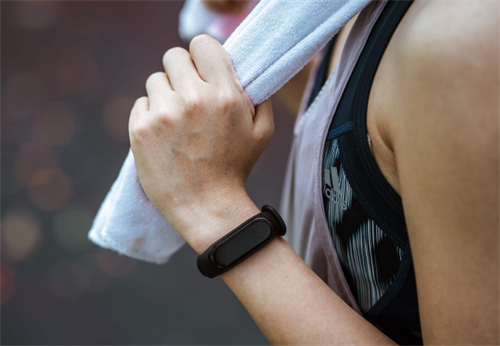
Sweat-Powered Wearables: The Next Frontier in Off-Grid Charging
Few hikers talk about it, but one slow-burning frustration hits hardest on long trips: battery anxiety.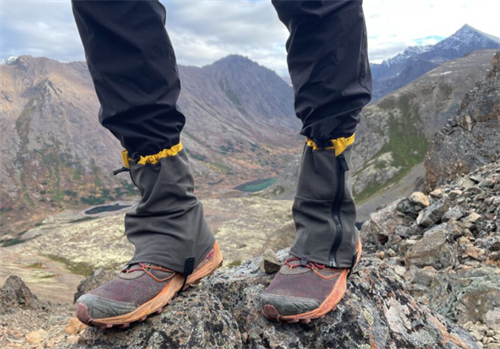
Gaiters: Are They Worth It on Rocky, Scree-Filled Trails?
When a hiker climbs from treeline into a high scree basin, a tiny decision starts to grow: gaiters or no gaiters.
Valbona–Theth Hiking Trail: Albania’s Most Scenic Single-Day Trek?
In the last few years, Albania’s “Accursed Mountains” have started showing up more often in hiking conversations.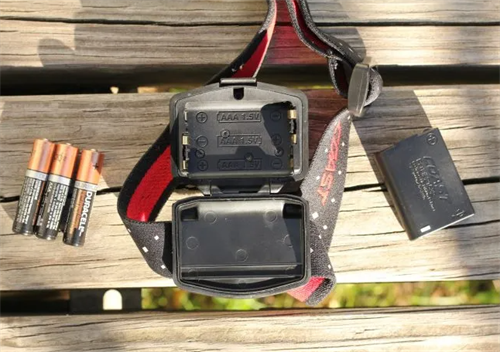
GPS and Headlamps: Rechargeable Batteries vs. Alkalines
Before any multi-day hike, there’s a decision that quietly shapes almost everything about your trip. But it rarely gets dissected in detail. What are you going to use to power your GPS and headlamp?