Gaiters: Are They Worth It on Rocky, Scree-Filled Trails?
By Mark R. Vance|Release date: May 9, 2026 |Reading time: 10 - 12 minutes
Author Background: Mark R. Vance writes about hiking equipment, backpacking systems, and mountain safety practices. His work focuses on how gear performs in real-world trail conditions, especially on long-distance routes, rocky terrain, and cold-weather hikes. Rather than concentrating on product marketing, he analyzes practical trade-offs involving weight, durability, comfort, and reliability. His articles often explore footwear systems, layering strategies, navigation tools, and emergency preparedness for independent hikers. Drawing from years of trekking experience and outdoor research, he aims to explain technical outdoor topics in a clear and accessible way for both newer hikers and experienced backpackers.
When a hiker climbs from treeline into a high scree basin, a tiny decision starts to grow: gaiters or no gaiters.
Gaiters used to be firmly winter gear in most people’s minds — deep snow, slush, slop. But over the last five or six years, ultralight stretch gaiters have been showing up all over dry, rubbly sections of the Colorado Trail, high routes in the Alps, even the HRP in the Pyrenees. What kind of problem are they actually solving, and what hidden trade-offs do they introduce?
That’s what this piece tries to untangle. I won’t pretend there’s a single neat answer. Instead, I’ll walk you through what the available test data says, a bit of foot biomechanics, and a whole lot of noodling from long-trail community experience. Think of it as a level-headed — and sometimes a little messy — look at an oddly divisive piece of fabric.
The Real Problem with Scree: It’s Not Just “Rocks in My Shoes”
On the surface, the main annoyance of scree is grit and pebbles sneaking into your shoe and poking at your foot. But over miles, one tiny nuisance turns into a cascade.
Debris doesn’t just sit there. With every step, micro-movements inside the shoe grind those particles against your skin and socks. A 1995 review by Knapik and colleagues in Sports Medicine specifically identified persistent rubbing and localized moisture as the chief external triggers for friction blisters. Any step that cuts down on that grinding helps directly.
In plain English, one innocent-looking grain of sand can, over a few hours, build you a blister that shifts your whole gait. And once you start walking even slightly crooked to favor a hotspot on a heavy-pack descent, stress climbs into your knees and hips.
Here’s another thing that doesn’t get enough airtime: stopping constantly to pull off your shoe and shake out grit kills your rhythm. On a long scree descent, if you’re halted every ten or fifteen minutes, the interruptions drain time and, more importantly, fritz your focus. For a fast-and-light hiker trying to beat the sunset, that rhythm loss is sometimes more consequential than shaving a few ounces from the pack.
And not all scree is equal. The weathered schist and slate you get in the Alps or the Sierra Nevada tends to break into thin, sharp flakes — perfect for finding the gap next to your tongue and then sitting there, prodding the top of your foot.
Volcanic cinders and basalt chips in places like Hawaii or Iceland still pour into your shoe but with blunter edges. That’s more a persistent annoyance than a skin-shredder. Point being, these two terrains don’t ask for the same response.
What a Gaiter Actually Does: Blocks an Invisible Pathway
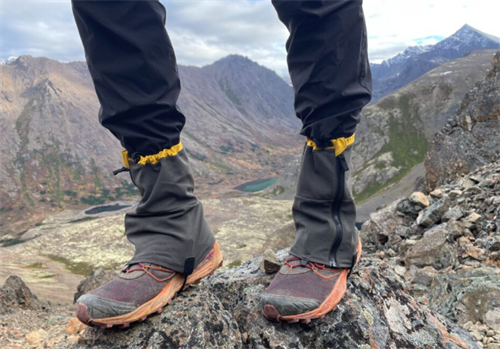
If we strip away the marketing, a lightweight gaiter on dry scree is basically a stretchy barrier — not a protective shell.
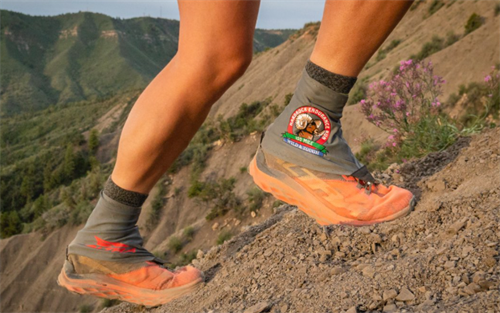
With every stride, the flex of your shoe collar creates a sort of tiny bellows effect. As the upper lifts, it pulls air and fine grit toward any open gap. When you push off, some of that debris gets forced inside. Low-cut shoes and trail runners with a non-gusseted tongue are especially vulnerable to this.
A snug stretch gaiter forms a smooth shield just above the ankle, physically shrinking the space where particles can sneak in. OutdoorGearLab’s 2025 comparative review of hiking and trail running gaiters specifically noted that well-fitted ultralight stretch models demonstrably cut down sand and small stones entering low- to mid-height trail shoes. Emphasis on well-fitted — if a gaiter sags, rolls, or isn’t reliably attached to the shoe, its blocking ability collapses fast.
Some long-haul hikers also report that after days of dry use, the sock and insole inside a gaitered shoe stay considerably cleaner and that merino socks develop funk more slowly. Now, I haven’t found a rigorous study measuring sock cleanliness with gaiters versus without. But given that stink largely comes from bacteria feasting on organic debris, keeping that debris out in the first place should, at least logically, help maintain foot hygiene.
Just as important is what a gaiter doesn’t do. It won’t stop a sharp rock from puncturing your sole. It’s not ankle support. And on routes that require frequent crampon transitions it can just get in the way. That’s not what it’s for.
A Decision Map with No Perfect Answers
Whether gaiters are “worth it” depends on a handful of route-specific dials, not a universal yes or no.
Rock type and stability. If trip reports keep mentioning “loose angular scree,” “shale littering the slabs,” or long descending traverses through decomposing slate, the hassle a gaiter solves is probably bigger than the hassle it creates. But if you’re mostly on solid granite benches and hard-packed dirt, that same gaiter is just extra fabric — and may even, in a rare chimney move, introduce a snag worry.
What’s on your feet. Low-cut trail runners and lightweight hikers gain the most from short gaiters because the shoe collar sits so low. Mid-cut boots with a non-gusseted tongue can still get a worthwhile add-on benefit. Heavy full-leather boots already have some built-in barrier from collar height and tongue construction; adding a gaiter to those often just means more insulation you don’t need.
Descent continuity. A route with long, unbroken stretches of scree decline rewards uninterrupted movement. Experienced hikers often mention that keeping a fluid rhythm on steep, loose terrain helps preserve concentration and may lower the odds of a stumble. If you’re the sort who prefers a stop-start tempo anyway — lots of photo breaks, lots of pauses — then a gaiter’s flow advantage fades.
Another useful mental shortcut is to estimate your daily “shoe-dump count.” If guidebook notes and trip reports suggest you’ll be dumping out shoes four or five times a day, the cost-benefit tilts strongly toward gaiters. If you might only deal with it once or twice, bringing them might be more about neatness than necessity.
Using Them: A Few Practical Anchors
The gaiters most relevant here are the featherweight stretchy shorts: pairs that weigh 45–70 grams total, breathable woven fabric, secured under the shoe with a thin cord or plastic clip. Think Dirty Girl Gaiters or the Rab Scree style. Their design brief is simple: keep crud out, nothing more. You spot them a lot on the Pacific Crest Trail and the Continental Divide Trail — hikers buy a pair and just leave them on for thousands of miles.
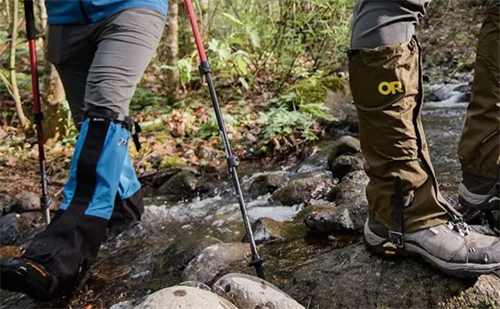
If your route also mixes in mud, slushy snow patches, or abrasive brush, a mid-weight waterproof-breathable gaiter might be on the table. These usually put something like eVent on the front panel and tougher fabric below. The trade-off is more weight and retained heat in exchange for versatility. On pure dry-scree routes, most hikers find these overbuilt and prefer to save them for shoulder-season trips.
One too-easy-to-miss trick when setting up stick-on Velcro for the heel: mark the position while wearing your thickest hiking sock. Too little room and the gaiter rides low and pops off; too much and it slips. Some long-distance hikers also swap out the stock underfoot cord for a length of accessory cord or an old shoelace to get more life on sharp rock. It’s a low-cost reliability tweak that takes five minutes at home.
Myths, Overrated and Underrated
“Gaiters make your lower legs swampy and hot.”
This one has some truth with dark, long waterproof models on windless summer slopes. But according to feedback captured in OutdoorGearLab’s 2025 gaiter test, several testers reported that with light-colored, highly breathable stretch fabrics, the perceived added heat was barely noticeable even in 30°C dry heat. The lower leg just isn’t as sensitive to thermal comfort as, say, your head or chest, which probably explains why the myth persists while field tests rarely back it up.
“I have waterproof socks, so I can skip gaiters.”
Waterproof socks keep water out. They don’t stop a sharp pebble from grinding into your foot. The medium is different — water versus solid mechanical grit. The two items can work together, but one doesn’t replace the other.
“My boot has a semi-gusseted tongue. That’s enough.”
For powdery sand, often yes. For thin flat chips sneaking in from the sides of the tongue, especially on downhills where foot shifts loosen the tongue’s seal, that built-in defense gets outflanked. Overconfidence in the tongue gusset is sometimes exactly where a blister starts.
A Conclusion that Leaves Some Room
On the great majority of loose, rocky trails, a well-designed breathable short gaiter under 60 grams is one of those rare pieces that improves the foot’s micro-environment at almost negligible weight cost. It’s not a replacement for good socks, well-fitting shoes, or common sense. But it closes a weak point we often overlook: the shoe’s top opening.
If your route is mostly clean slabs and packed tread, or if you’re genuinely never bothered by debris in your shoes, adding another layer probably isn’t worth the fuss. In the end, the choice is less about the gaiter itself and more about the intersection of your route, your sensitivity to irritation, and how you’ve built the rest of your footwear system.
FAQ
Q: Low-cut shoes on a scree slope — what gaiter should I look for?
A: Stretchy fabric and a snug fit first. The underfoot cord ought to be easily replaceable. Try the gaiter on over your thickest hiking sock to make sure the upper band isn’t too tight and the Velcro lands where it should. Color doesn’t matter much, but light colors show trail grime faster.
Q: What do I do if the underfoot cord snaps on sharp rock?
A: Carry a spare length of 3 mm accessory cord or an old shoelace. Some hikers slide a tiny section of clear tubing over the cord in high-wear spots as a buffer, though that tiny added bulk can be noticeable on edging moves, so mind your footing.
Q: Only a short section of my route is scree. Should I wear them the whole time?
A: With a 50-gram shorty, the presence is near zero — just leave it on. For a heavier waterproof model, push it down around your ankle or stash it for the non-scree parts so you don’t overheat.
Q: Do gaiters increase risk on scrambling sections?
A: A snug low-profile short gaiter adds negligible snag risk. Steer clear of heavy-duty models with metal buckles or quick-release clips on technical terrain. Risk always depends on the specific environment, so assess accordingly.
References
[1] Knapik, J.J., Reynolds, K.L., Staab, J., Vogel, J.A., & Jones, B.H., “Friction Blisters: Pathophysiology, Prevention and Treatment,” Sports Medicine, 20(3), 1995, pp. 136–147.
[2] OutdoorGearLab, “Best Gaiters for Hiking and Trail Running of 2025,” 2025.
[3] Mountaineering: The Freedom of the Hills, 9th Edition, The Mountaineers Books, 2017.
[4] The Mountaineers, Backcountry Footcare: A Guide for Hikers and Backpackers, 2019.
Disclaimer
This article is meant as a gear selection and outdoor knowledge reference only. It doesn’t replace professional medical advice, on-site risk assessment, or formal backcountry skills training. Brand and model mentions are for analysis, not promotion. Outdoor activities carry inherent unpredictability; you need to make your own calls based on the day’s weather, your fitness, the route conditions, and your equipment’s state. The author and publisher assume no liability for injuries, losses, or accidents arising from the use of this information. Always check current route conditions and local land manager safety notices before you head out.
Recommend for you:
First Hikers Using Starlink: What High-Speed Internet Does to the Wilderness Experience
In June 2024, SpaceX launched the Starlink Mini. It weighs 1.1 kg (2.43 lbs), according to SpaceX’s official specifications page, or 1.53 kg (3.37 lbs) with its 15-meter DC power cable and kickstand—and it fits in a backpack.
Valbona–Theth Hiking Trail: Albania’s Most Scenic Single-Day Trek?
In the last few years, Albania’s “Accursed Mountains” have started showing up more often in hiking conversations.
Lesotho: Trekking in the Kingdom of the Sky
Lesotho is often called the “Kingdom of the Sky.”Its lowest point is around 1,400 m, making it the highest-altitude country in the world.
Electric Mountain Bikes: New Access, New Conflicts on the Trail
Electric mountain bikes — eMTBs, as most people call them — are quietly reshaping what it feels like to be on trails in North America and Europe.