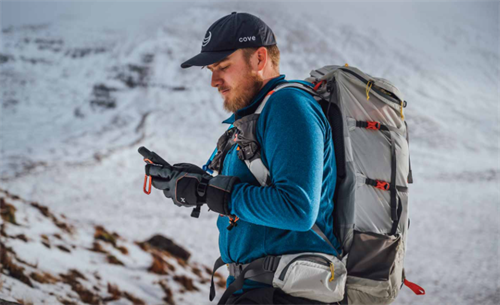
Electric Mountain Bikes: New Access, New Conflicts on the Trail
By Michael J. Reynolds| Release date: May 9, 2026 | Reading time: ~12 minutes
Author Background: Michael J. Reynolds is a technology and outdoor systems writer covering the intersection of hiking, mobility, wearable devices, and emerging expedition technologies. His articles examine how developments such as satellite communication, AI-assisted rescue systems, advanced materials, and portable energy solutions are beginning to influence outdoor travel and backcountry safety. He is particularly interested in the practical impact of technology on self-supported trekking and wilderness experiences rather than speculative marketing claims. His work combines industry reports, product research, and long-form analysis to explore how outdoor equipment and mountain travel may evolve over the coming decade.
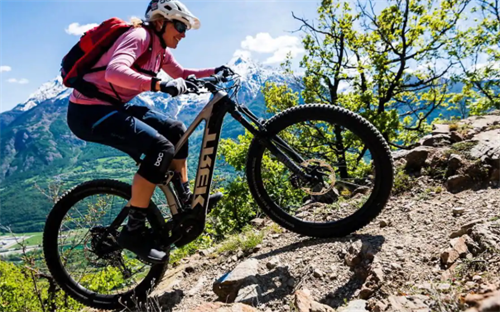
Electric mountain bikes — eMTBs, as most people call them — are quietly reshaping what it feels like to be on trails in North America and Europe. The first time a lot of hikers really noticed this shift, it wasn't from a news story. It was on a trail they'd walked for years — a nearly silent bike coming up from behind, or more tire marks showing up on a singletrack that used to belong mostly to boots.
Behind those small moments, the policy ground is shifting fast.
In March 2026, the Bureau of Land Management's Moab field office officially opened about 200 miles of previously non-motorized trails to Class 1 e-bikes. The decision followed a yearlong environmental review and a public scoping process that wrapped up in September 2025. Over in Oregon, the Deschutes National Forest finalized its own decision — after months of analysis and public comment — to allow Class 1 e-bikes on approximately 161 miles of trail starting April 1, 2026. These are not isolated cases. They're part of a pattern.
It's Not Just the Bike. It's the Class — and Who Owns the Land.
If you've tried to look up eMTB rules and just ended up confused, you're not alone. But on public land in North America, the framework is simpler than it first appears — once you know which two things to focus on.
The first is the class system. Class 1 is pedal-assist only: no pedaling means no motor, and the assist cuts out at 20 miles per hour (about 32 km/h), as defined in 43 CFR 8340.0-5(j). Class 2 bikes have a throttle you can use without pedaling, capped at the same 20 mph. Class 3 is also pedal-assist but goes up to 28 mph (45 km/h). Almost every non-motorized trail that's been opened to e-bikes so far allows Class 1 only. What that means, practically: the bikes you'll encounter won't be dramatically faster than regular mountain bikes on flat ground. But they can climb with a lot less effort from the rider — which means they'll show up in places you might not have seen many bikes before.
The second thing matters even more: who manages the land? The BLM and the U.S. Forest Service have very different postures. The BLM has been moving quickly. Moab is the clearest example — starting March 1, 2026, the BLM Moab Field Office listed specific trail networks open to Class 1 e-bikes, including Navajo Rocks, Klondike Bluffs, and Mag 7, while holding the line on routes like Porcupine Rim where the land crosses into USFS jurisdiction, with e-bikes remaining prohibited there. The USFS is a lot more cautious overall. Most non-motorized singletrack on national forest land still bans all classes of e-bikes. Deschutes is very much an outlier.
The practical takeaway: you can't just check if you're in "a national forest" and assume you know the rules. You have to drill down to which ranger district and which trail. The agency that owns the dirt under your boots is often a better predictor of the rules than the state line you crossed.
Europe works differently. Under the EU's long-standing regulatory framework, a standard pedelec — capped at 250 watts, 25 km/h assist, pedal-assist only — is legally treated as a bicycle. The real bans target faster S-pedelecs, which in many countries require license plates and insurance. But the on-the-ground experience varies. Germany tends to be more permissive; France and Italy sometimes add extra restrictions inside nature reserves and national parks. And in the Alps, more areas are starting to draw separate eMTB routes — deliberately pulling bike traffic away from hiking paths.
How Big Is the Conflict? The Gap Between the Numbers and What You Feel.
Talk about e-bikes on trails gets noisy online. The actual on-the-ground friction looks different.
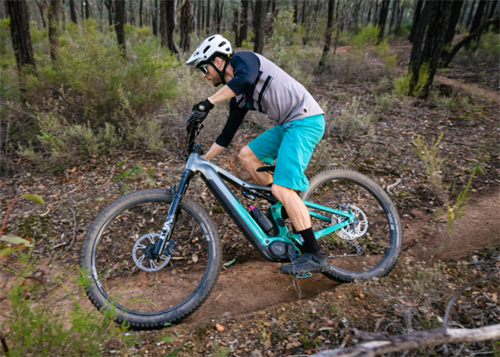
Dead Horse Point State Park in Utah ran a field study in 2023. The data showed eMTBs averaged only about 2 to 3 km/h (1 to 2 mph) faster than traditional mountain bikes, with terrain type having a much bigger impact on speed than motor type. Both conventional and e-bike riders reduced speed in areas of potential conflict, exhibiting similar caution at junctions. In California, the East Bay Regional Park District began a pilot program in August 2017, limiting approved e-bikes to Class I and II with a 15-mph cap. Staff conducted user counts and surveys across the designated trails.
A University of Vermont study interviewed people right on shared trails. In areas where e-bikes were already allowed, most hikers told researchers they hadn't noticed any eMTBs and didn't report issues with speed, etiquette, or crowding. But when the same researchers surveyed people who had never actually shared a trail with an e-bike, those attitudes were much more negative — bias shaped by perception, not direct experience.
That doesn't mean there's no problem. Two things deserve more attention than they usually get.
One: eMTBs are quiet enough that you may not hear them coming. If you're wearing noise-canceling headphones on a windy day or on terrain with limited sightlines, you could be startled — and surprise can escalate into conflict fast.
Two: almost all these studies were run when eMTB numbers were tiny. The East Bay pilot focused on a modest number of trails and explicitly gathered baseline data on usage patterns. Nobody knows whether the relatively calm findings will hold if trailhead counts rise significantly. That question remains open.
Then there's the data problem. People sometimes cite "at least 20,000 e-bike injuries and 3,000 hospitalizations a year in the U.S." — figures from a September 2025 American College of Surgeons statement. But those numbers come from national datasets that lump together city streets, commuter crashes, and everything else. Applying them directly to mountain trails is misleading. Similarly, a 2025 study from Norway published in the European Journal of Public Health found that per kilometer traveled, e-bikes had a lower injury risk than conventional bikes — but the data came from urban commuting patterns, not backcountry terrain. There's still no systematic, peer-reviewed study specifically tracking hiker-eMTB interactions on mountain trails. That's a gap worth acknowledging.
Dirt and Animals: Where the Environmental Research Actually Stands
One of the first things hikers worry about is trail erosion. The research here is fairly consistent — within its limits.
IMBA (the International Mountain Bicycling Association) has stated that Class 1 eMTB trail impact is comparable to traditional mountain bikes. Other assessments, including work done for the BLM and USFS, have reached similar conclusions. What actually tears up a trail isn't the motor — it's behavior: skidding, braking hard on loose surfaces, cutting switchbacks, riding when the ground is wet. A 2025 study in Science of the Total Environment using high-resolution topography scans developed methods to detect erosion changes smaller than 1 cm, but focused on mountain bikes in general rather than isolating eMTB effects specifically.
A caveat matters here. A motor lets riders reach more remote areas with less fatigue. Places that were once too far for most bikes might not stay that way. A review published in Global Ecology and Conservation noted that growing eMTB use could increase the spatial reach of biking, potentially amplifying impacts on less-frequented habitat. The logic is sound. The long-term monitoring data to confirm or refute it simply doesn't exist yet.
Wildlife research follows a similar pattern.
Research on outdoor recreation and deer, including work out of the University of Zurich, suggests that concentrating human activity on established trails matters more for wildlife than the type of equipment people carry. Which would suggest eMTB disruption isn't primarily about the motor. But eMTBs make it easier to reach quieter, less-disturbed zones — exactly the opposite of the "concentrate use" principle. A 2025 study out of Boise State University found that larger, noisier groups of trail users (whether hikers or bikers) were up to 6 to 8 times more likely to cause wildlife to flee, though it didn't specifically measure eMTB noise versus other disturbance types. So the honest answer is: the existing evidence is thin. There's a lot of extrapolation going on in public debate, built on short-term observations and reasonable-but-unverified assumptions.
Before You Go, and While You're Walking
Here are a few things you can actually act on.
Check policy by trail, not by region. Moab opened about 200 miles on BLM land — but adjacent USFS segments like Porcupine Rim remain closed to e-bikes. The most reliable method is to go directly to the managing agency's official website. BLM and USFS each maintain separate trail databases, and updates don't always sync. Third-party platforms can help, but their e-bike labels aren't always current. In Europe, know the difference between "pedelec allowed" and "all e-bikes allowed." Some local restrictions exist only on national park pages in the local language.
On shared trails, keep your ears open. Noise-canceling headphones in transparency mode are safer than full isolation. On blind corners, walking near the outside edge gives you an extra moment to spot someone coming either direction. In much of North America the general principle is "wheels yield to heels" — hikers have right of way and aren't expected to step aside, but a small adjustment and a quick nod can prevent tension before it begins.
Choose your destination based on what you actually want. For a completely motor-free experience, most USFS non-motorized trails and all federally designated Wilderness Areas remain your safest bet — under 36 CFR 261.18, even regular bicycles are prohibited in Wilderness. If you're fine with occasionally seeing a Class 1 eMTB, BLM-managed land now offers a growing set of options. Also worth noting: current counts suggest eMTB usage is still a small percentage of total trail use, but weekends and holidays around popular trailheads can feel very different. Going midweek often makes as much difference as switching trails entirely.
Trails Are Changing. A Few Things Don't.
eMTBs aren't going away. The numbers point toward more adoption, not less.
The smartest thing a hiker can do right now is understand two things. First: the rules are changing fast, and they're inconsistent from one piece of land to the next — BLM, USFS, and individual state and local jurisdictions are moving at different speeds. Second: when you look past the online noise, the variable that drives most real-world conflict and environmental impact isn't the bike. It's the person on it. Spending an extra half-hour on trail-specific policy research before a trip — and keeping a reasonable level of awareness and respect while you're out there — remains the most practical protection you've got.
FAQ
Q: Are there any hiking areas left where I won't encounter an e-bike at all?
Right now, most non-motorized trails on U.S. Forest Service land, and all federally designated Wilderness Areas, still prohibit e-bikes. But rules keep shifting — check the specific trail's status before you go.
Q: How much faster is an eMTB than a regular mountain bike, really?
A field study at Dead Horse Point State Park in 2023 clocked eMTBs at only about 2 to 3 km/h faster on average. Terrain is a much bigger factor than motor type, and both e-bike and conventional riders slow down similarly at junctions.
Q: What can I do if an e-bike rider comes up on me too fast or scares me?
On most shared trails, hikers have right of way. Riders should slow down and announce themselves. If unsafe behavior is a recurring problem on a particular trail, document the time and location and report it to the managing agency.
Q: Has the environmental impact of eMTBs been studied enough?
For trail erosion, multiple studies suggest Class 1 eMTBs have impact comparable to traditional mountain bikes when ridden responsibly. For long-term effects on wildlife behavior and remote habitats, the research is still thin — and most of what gets quoted goes beyond what the data can actually support.
References
[1] Bureau of Land Management, Moab Field Office. (2026). E-Bikes — Moab Field Office. https://www.blm.gov/e-bikes-moab-field-office
[2] Deschutes National Forest. (2025). Final decision: Class 1 e-bikes on select trails. Reported in The Bulletin, March 28, 2026.
[3] East Bay Regional Park District. (2017). E-Bike Pilot Program Board Resolution. https://www.ebparks.org
[4] University of Vermont, cited via PeopleForBikes. (2023). Electric mountain bike trail perception study.
[5] American College of Surgeons. (2025, June 10). Statement on the Safety and Regulation of E-Bikes. https://www.facs.org/about-acs/statements/statement-on-electric-bicycle-safety-and-injury-prevention/
[6] Fyhri, A. et al. (2025). Accident risk from e-bikes compared to conventional bikes. European Journal of Public Health, 35(Suppl 5), OA2041.
[7] International Mountain Bicycling Association (IMBA Europe). (2022). A Comparison of Environmental Impacts from Mountain Bicycles, Class 1 Electric Mountain Bicycles, and Motorcycles.
[8] Kuwaczka, L. F. et al. (2023). Ecological impacts of (electrically assisted) mountain biking. Global Ecology and Conservation, 44.
[9] Wimpey, J. & Marion, J. (2025). Can mountain bike-induced erosion be a major concern in natural areas? Evidence from high-resolution topography. Science of the Total Environment, 1001, 180532.
Disclaimer
This article is for informational and educational purposes only and does not constitute legal advice or official travel guidance. Trail regulations and policies change frequently. Before any trip, consult the latest bulletins and rules from the relevant land management agency. The author and publisher assume no responsibility for any loss or damage arising from reliance on the information provided. Views expressed reflect the author's analysis based on available information at the time of writing and do not represent the position of any institution, organization, or government agency. All data and trend analysis are based on publicly available information as of May 2026 and may be incomplete or out of date; readers should verify details through multiple independent sources.
Recommend for you:
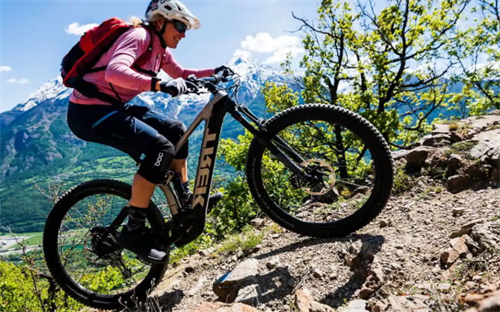
Electric Mountain Bikes: New Access, New Conflicts on the Trail
Electric mountain bikes — eMTBs, as most people call them — are quietly reshaping what it feels like to be on trails in North America and Europe.
Canister Stove vs. Liquid Fuel Stove: Which Cooking System for High-Altitude Trekking?
When you're walking a ridgeline at 4,000 meters carrying a week of gear, choosing a cooking system isn't just about making fire — it's a quiet argument with physics.
Tajikistan’s Fann Mountains: An Untouched Trekker’s Dream
For hikers who have already done a hut-to-hut traverse in the Alps or a few standard circuits in Nepal, the question of where to go next is shifting.
Crampons vs. Microspikes: What You Need for Spring Snow Hiking
Spring snow hiking — roughly March through May in the Northern Hemisphere — has a way of fooling you.