First Hikers Using Starlink: What High-Speed Internet Does to the Wilderness Experience
Author: Michael J. Reynolds| Release date: May 10, 2026 | Estimated Reading Time: 12 minutes
Author Background: Michael J. Reynolds is a technology and outdoor systems writer covering the intersection of hiking, mobility, wearable devices, and emerging expedition technologies. His articles examine how developments such as satellite communication, AI-assisted rescue systems, advanced materials, and portable energy solutions are beginning to influence outdoor travel and backcountry safety. He is particularly interested in the practical impact of technology on self-supported trekking and wilderness experiences rather than speculative marketing claims. His work combines industry reports, product research, and long-form analysis to explore how outdoor equipment and mountain travel may evolve over the coming decade.
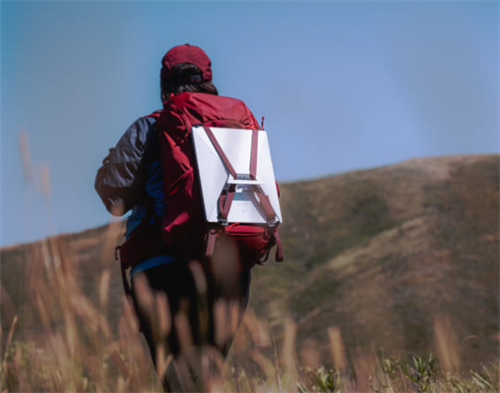
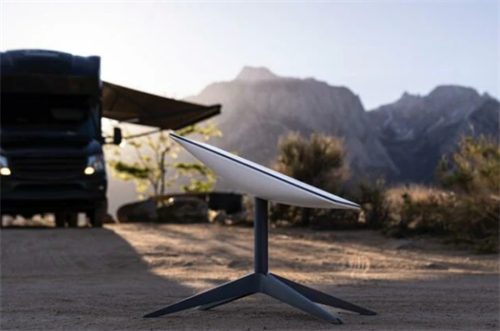
In June 2024, SpaceX launched the Starlink Mini. It weighs 1.1 kg (2.43 lbs), according to SpaceX’s official specifications page, or 1.53 kg (3.37 lbs) with its 15-meter DC power cable and kickstand—and it fits in a backpack. Runs off a normal USB-C power bank. And suddenly a hiker could pull genuinely fast internet from a valley with no cell tower in sight.
The power draw? Between 20 and 40 watts on average, based on SpaceX’s spec sheet and The Verge's measurements from June 2024. With something like an Anker Prime 27,650mAh power bank (99.54 watt-hours) you get two to three hours of runtime. With a smaller 10,000mAh pack, maybe a little over an hour.
So the question sitting in front of anyone planning a serious trip right now isn't “is this thing cool?” It's this: what goes into the pack, and what stays home? And maybe harder: what does carrying a live connection to everything actually do to the reason you went out there in the first place?
Power, Signal, and the Fine Print
The Mini sips power compared to older Starlink terminals, but that doesn’t make it a lightweight proposition once you add batteries. The terminal itself is 1.1 kg. With cable and kickstand, 1.53 kg. Then you add a power bank. The Verge ran the numbers in its launch-week coverage: a 99.54Wh battery gets you roughly two to three hours; a 40Wh pack, maybe an hour and change. For multi-day self-supported trips, you’re realistically hauling a 99Wh-or-larger battery and a backup, at which point the whole system lands somewhere between 1.8 and 3.6 kg. Gram-counters, take note.
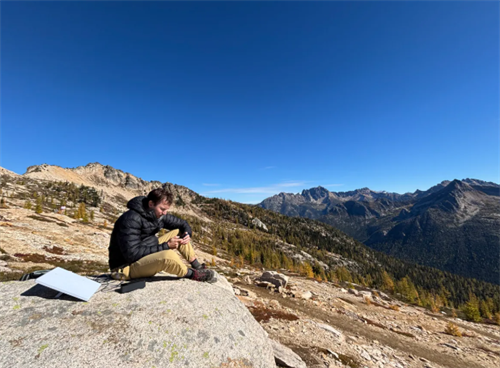
Then there's signal, and this is where the marketing slides get quiet. Starlink wants an open view of the sky. Yes, early testers pulled great speeds from mountain ridges and open campsites, especially above tree line. But anecdotal reports from Appalachian Trail hikers on Reddit describe dropouts in thick forest and deep valleys—unreliable enough that you wouldn't want to bet an emergency on it mid-trail. The practical takeaway: this is camp internet, not trail internet. If your route spends most of its hours in the trees or down in a canyon, the actual connection windows might be far fewer than you imagine.
Safety: More Information, New Judgment Calls
Now the picture gets more interesting.
Garmin announced in October 2022 that its inReach satellite messenger devices had surpassed 10,000 SOS incidents worldwide since tracking began in 2011. Those devices do short texts and GPS coordinates. And for a lot of hikers, that's plenty.
Starlink changes the equation by adding video calls, real-time radar loops, and the ability to pull in advice from friends or weather data while you're still on the ridge looking at the sky. More information should mean better decisions, and in plenty of cases it will.
But outdoor safety researchers point to a pattern called risk compensation: when people feel they've got a stronger safety net, they sometimes take on more risk. In a related research paper, Tod Schimelpfenig, curriculum director for the NOLS Wilderness Medicine Institute, noted that communication devices are gradually reshaping backcountry decision-making dynamics, sometimes pushing groups toward choices they probably wouldn't make without a connection in hand.
There's a subtler shift too. When you can pull real-time radar and a distant friend's weather take straight to your phone, do you still spend equal time actually looking at the cloud building overhead? The Wilderness Medical Society has noted in related literature that satellite communication tools have a role in backcountry first aid but shouldn't be treated as a substitute for experience and reliable local judgment. The device works right up until the battery dies or the canopy blocks the signal. What happens to your decision-making then?
This isn't an argument against bringing one. It's just a recognition that the relationship between connectivity and judgment is more complicated than “more information equals safer.”
What the Connection Does to the Feeling of Being Out There
This is where the science gets concrete.
In 2012, a study by Atchley, Strayer, and Atchley published in PLoS ONE found that backpackers who spent four days immersed in nature with no access to multimedia or technology scored 50% higher on a creativity and problem-solving task compared to a control group tested before the trip. The finding wasn't just statistically significant—it was big enough to make you stop and think.
The mechanism, as outlined in Attention Restoration Theory by Kaplan (1995), is that natural environments allow the brain's directed-attention system—the part that has to constantly filter distractions and switch between tasks—to rest and recover. Urban and digital environments keep that system running. Nature lets it idle.
And here's the part that matters for the Starlink-in-the-pack question: those cognitive benefits don't come automatically just because you're physically standing in a pretty place. They require something else too: a real break from the always-on, multi-device attention environment.
Even if you don't open the laptop, just knowing the connection is there may be enough to keep part of your attention tethered. Psychologists refer to this as “continuous partial attention”—a state where the mind never fully lands because it's keeping one ear open for the next ping. Nobody has yet done a controlled study measuring creativity scores in hikers carrying live Starlink connections versus those carrying only a basic SOS device. But the direction of the existing evidence suggests a trade-off worth thinking about.
This lands in very concrete planning choices. A week-long trek where you check in online for an hour each evening and a week-long trek where you stare at the fire after sunset are going to feel different. Which one fits what you actually want from the trip? That's the question.
Digital Noise and the Unwritten Rules Taking Shape
Then there's the social layer, which is arguably more charged than the personal one.
As soon as the Mini launched, some outdoor commentators worried about what happens when someone fires up a video call at a shared campsite or streams audio without headphones in a place people hike to get away from exactly that. In North American trail campsites and around Alpine huts in Europe, bright screens at night and speakerphone noise are already showing up in complaints on forums and in outdoor media comment sections.
Some in the hiking community have started discussing an extended version of Leave No Trace: should the principle that governs food wrappers and fire ash also cover the digital and auditory footprint we leave on others? There's no formal rulebook yet. But the conversation has started.
Pricing raises a separate question. When the Mini launched in the US in June 2024, The Verge reported the hardware at 599,withanextra599,withanextra30 monthly Roam add-on providing up to 50GB of mobile data for existing Residential plan subscribers. By early 2026, pricing shifted: as reported by Notebookcheck in January 2026, the hardware price was cut to 199withRoamserviceat199withRoamserviceat50 per month for 100GB. That's a sharp drop, but it's still real money, and it creates an information gap between those who can absorb the cost and those who can't. That divide hasn't become a serious social split on the trail yet, but some outdoor media outlets have started to note it.
A Practical Take: Questions Before You Pack It
So should you bring one? The more useful question is: what's this trip actually about?
A few things to sort out before the hardware ever goes in the pack.
What do you actually need connectivity for? A lot of hikers benefit from splitting the question into layers: emergency SOS, daily safety check-in, environmental info like weather radar, and non-essential use like work and social media. For the first two, a sub-150g two-way satellite messenger handles everything and barely touches your battery budget. The Mini really adds capability in the third and fourth layers—and those are the ones where the line between “need” and “want” gets blurry.
Route and charging reality. If the trip spends long hours under dense canopy or in deep valleys, you may find the connection windows too narrow to rely on. And if you're away from wall outlets for days, power management becomes the dominant question—either carry more weight or restrict usage to very brief, planned windows.
Agree with your group beforehand. Most of the friction around devices in the backcountry isn't about the device. It's about people not having talked through expectations: when is it okay to power up? Where? Agreeing to use it only in the tent, with headphones, and keeping the screen dimmed goes a long way. The real social impact of these devices turns out to be surprisingly manageable when there's a quick conversation before the trailhead.
Consider a partially-off rhythm. Some early adopters who use the Mini for remote work while hiking have settled on a specific daily window—logging on for a fixed hour, then powering down completely the rest of the time. From a power-management standpoint it's practical. From an experience standpoint it's one way to draw a line so the connection doesn't draw the shape of your whole day.
Portable satellite internet in the backcountry is still in its early innings. Hardware will get lighter. Power draw will drop. Prices will shift further. But those are technical details. The bigger question is personal: who do you want to be out there? That one's not getting an update patch. On trails across North America and Europe, figuring out an answer might be the most useful thing about the whole debate.
FAQ
Q: What does a Starlink Mini setup actually weigh for backpacking?
A: The dish alone is 1.1 kg (2.43 lbs) per SpaceX specifications. With DC power cable and kickstand, 1.53 kg (3.37 lbs). Add the battery needed for 2–3 hours of runtime and the whole system typically ends up between 1.8 and 3.6 kg. This isn't ultralight gear.
Q: Can I get a reliable signal in deep forest or a canyon?
A: Usually not. The terminal needs a relatively open view of the sky, per SpaceX's own documentation. Solid performance reports come from ridgelines, open campsites, and alpine meadows, not from heavy tree cover or narrow valley floors.
Q: Could using Starlink get banned on trails?
A: As of early 2026, most trail management agencies haven't issued specific rules on portable satellite internet terminals. However, several national parks with strong wilderness character protections are watching closely, and it's plausible that community norms will shape things sooner than formal regulations do.
Q: If I only need safety check-ins, do I really need Starlink?
A: No. A lightweight two-way satellite messenger like the Garmin inReach series weighs under 150g and handles SOS and text-based check-ins with minimal battery demands.
References
[1] Atchley, R. A., Strayer, D. L., & Atchley, P. (2012). Creativity in the Wild: Improving Creative Reasoning through Immersion in Natural Settings. PLoS ONE, 7(12), e51474. https://doi.org/10.1371/journal.pone.0051474
[2] Kaplan, S. (1995). The Restorative Benefits of Nature: Toward an Integrative Framework. Journal of Environmental Psychology, 15(3), 169–182.
[3] Holden, T. (2004). The Impacts of Satellite Phone Technology on a North Carolina Outward Bound School Experience. Master's Thesis, North Carolina State University.
[4] SpaceX. (2024). Starlink Mini Specifications. https://starlink.com/specifications?spec=5
[5] Schimelpfenig, T. (2021). Technology and Risk in Backcountry Decision Making. NOLS Research Papers.
Disclaimer
This article is based on publicly available information, industry reports, user community discussions, and product literature as of May 8, 2026, and is intended as an objective analysis and decision-making framework. Specifications, service coverage, and community norms may change. Nothing here constitutes a recommendation to buy any particular product, nor does it substitute for professional outdoor skills training, weather assessment, and pre-trip planning. Before entering backcountry areas with uncertain connectivity, carry and know how to use traditional navigation tools, and plan a trip that fits your own experience and conditions. The author has no financial interest in any commercial entities mentioned.
Recommend for you:
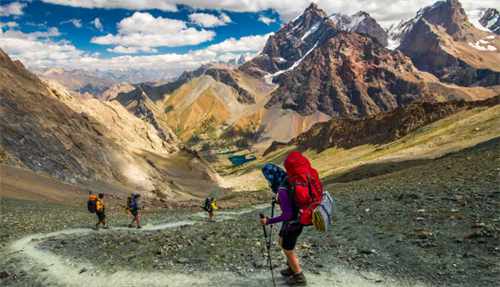
Tajikistan’s Fann Mountains: An Untouched Trekker’s Dream
For hikers who have already done a hut-to-hut traverse in the Alps or a few standard circuits in Nepal, the question of where to go next is shifting.
How 3D-Printed Trail Food Might Change Your Backcountry Cooking Menu
Backpacking food hasn’t changed much in decades. You’ve got freeze-dried pouches, energy bars, oatmeal, nuts with chocolate. They pack calories, weigh little, and last forever. But exciting? Not really.
No More Missing Hikers? How AI-Powered Search-and-Rescue Drones Operate
Hikers go missing for reasons that sound almost mundane: a weather front rolls in faster than expected, someone loses the trail, a phone battery dies, and the last thread of contact snaps.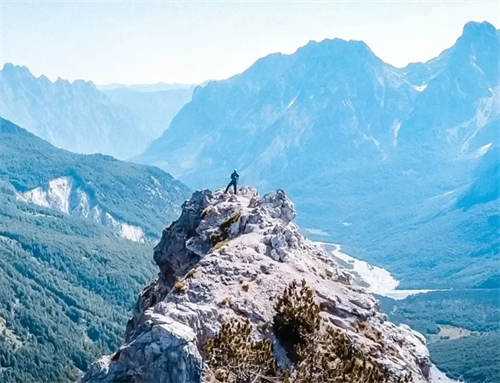
Valbona–Theth Hiking Trail: Albania’s Most Scenic Single-Day Trek?
In the last few years, Albania’s “Accursed Mountains” have started showing up more often in hiking conversations.