
Sweat-Powered Wearables: The Next Frontier in Off-Grid Charging
By Michael J. Reynolds|Release date: May 14, 2026 |Reading time: 10–12 minutes
Author Background: Michael J. Reynolds is a technology and outdoor systems writer covering the intersection of hiking, mobility, wearable devices, and emerging expedition technologies. His articles examine how developments such as satellite communication, AI-assisted rescue systems, advanced materials, and portable energy solutions are beginning to influence outdoor travel and backcountry safety. He is particularly interested in the practical impact of technology on self-supported trekking and wilderness experiences rather than speculative marketing claims. His work combines industry reports, product research, and long-form analysis to explore how outdoor equipment and mountain travel may evolve over the coming decade.
Few hikers talk about it, but one slow-burning frustration hits hardest on long trips: battery anxiety. It’s not the blisters, the rain, or even the steep climbs. It’s watching your GPS, satellite messenger, heart-rate strap, and phone slowly drain. By day four, those battery bars fall faster than your own energy levels.
Traditionally, staying charged off-grid relies on three tools: solar panels, hand-crank generators, and power banks. Each works, but they all share one limitation—you have to pack the electricity before you hit the trail.
Some researchers, however, have started asking a different question: could your own body generate a bit of power while you walk? Sweat contains lactate, and with the right chemistry, lactate can release electrons. That’s a tiny current, but enough to spark curiosity in the lab. This article explores the current science, the prototypes, and what it could mean for hikers planning multi-day routes.
No hype, no endorsements—just a clear-eyed look at the facts.
Why Traditional Off-Grid Charging Falls Short
Solar Panels: Great in Sun, Useless in Shade
Portable solar panels can produce a solid 10–20 watts in direct sunlight. The Goal Zero Nomad 20, for instance, outputs 20 watts and weighs just over a kilogram. But full sun rarely lasts long on forested trails or in deep valleys. Cloud cover, tree canopy, or the weak sunlight of northern autumn can slash output by as much as 80%.
For hikers counting every gram, the trade-off is brutal: larger panels charge faster, but they also weigh more. Carrying one through shaded trails can feel like lugging around a promise that never delivers.
Hand Cranks: Hard Work for Minimal Gain
Hand-crank generators have a niche—emergency backup. They can provide maybe 10 watts if you keep cranking steadily. A smartphone, however, typically draws 5–20 watts while charging. Maintaining even the lower end means turning the crank almost nonstop, a taxing proposition when you’ve already burned thousands of calories on the trail.
Consider this: a single 18650 lithium-ion cell (2,600 mAh, 3.7 V) holds roughly 9.6 watt-hours and weighs about 45 grams. To fill it with a hand crank producing 10 watts, you’d need nearly an hour of steady effort—and that’s before energy losses. In practice, few hikers are willing to attempt that.
Power Banks: Storage Without Creation
Power banks are the workhorses of off-grid charging. They store energy but don’t create it. A 20,000 mAh unit weighs 440–560 grams. Once it’s empty, it’s just dead weight. On long trips without access to outlets, the only option is to carry more of them—adding bulk in exchange for a few extra hours of device runtime.
How Sweat Becomes Electricity
Enzymes Turn Lactate Into Current
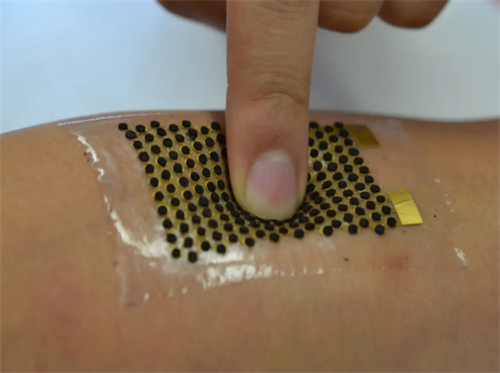
The main method involves enzymatic biofuel cells. Sweat carries lactate, which rises with exertion. Enzymes on a patch’s electrodes grab lactate molecules and pull electrons free. Those electrons travel through a circuit, eventually meeting oxygen to complete the reaction. No combustion, no toxic waste—just a thin patch powered by your own perspiration.
Think of it as a tiny biochemical engine idling on your skin.
Thermoelectric Generation: The Supporting Act
A second pathway taps the temperature difference between your skin and the air. Thermoelectric generators convert this heat flow into a small current. On its own, it’s weak; paired with lactate harvesting, it acts as a helpful sidekick rather than a primary energy source.
Power Output: Don’t Expect to Charge Your Phone
Current prototypes deliver microwatts to milliwatts. A typical phone charger runs at 5–20 watts—thousands of times more.
UC San Diego (2022): A stretchable e-skin patch produced ~1 mW from sweat, enough to drive a Bluetooth Low Energy (BLE) radio.
Tokyo University of Science (2026): A screen-printed enzymatic patch achieved 165 µW/cm² at 0.63 volts, also powering BLE signals.
This isn’t phone-charging territory. It’s enough for heart-rate monitors, GPS trackers, or emergency beacons, extending their runtime rather than filling batteries quickly.
What Prototypes Exist and How Close Are They to Market?
Mostly Lab Experiments
If you walk into an outdoor store today, you won’t find sweat-powered chargers. The UC San Diego and Tokyo University patches are lab prototypes. Other research explores silver-thread electrodes or laser-induced graphene, but none are ready for the trail.
Where Would You Wear Them?
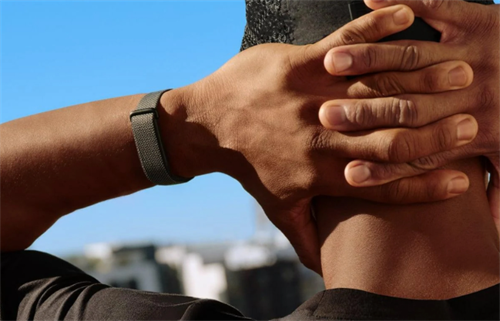
Most designs favor areas with reliable sweat and skin contact: headbands, wristbands, inside backpack straps, or tight base layers across the chest. These locations ensure consistent lactate collection.
When Will Consumers Get Them?
Industry reports suggest at least 3–5 years before consumer-ready sweat-harvesting devices appear, possibly longer. Military teams or polar expeditions might get field trials first. Market growth is projected to be rapid—33.6% CAGR for the broader wearable sweat analysis sector—but from a tiny starting point.
Practical Implications for Hikers
Buying Extra Hours for Low-Power Devices
The immediate benefit isn’t replacing a power bank—it’s extending the life of low-draw devices like heart-rate monitors or satellite messengers. Even saving one backup battery’s worth of energy reduces pack weight by a few dozen grams.
The Ultralight Dilemma
Sweat-powered gear fits the ultralight ethos: harness what your body already provides. But the patch itself, with electrodes and storage circuitry, adds weight. Researchers are still testing durability: enzymes degrade, sweat contains impurities, and flexing or moisture can reduce patch lifespan.
Sweat Volume Matters
If you barely sweat—cold climates, high altitude, low exertion—output collapses. The sweet spot is warm, humid trails with moderate to high effort. Not every hike will benefit.
How to Approach This Technology Today
Lab Records Are Not Retail Products
High power-density claims usually come from controlled lab conditions. Don’t confuse those numbers with real-world gear. True products must prove scalable manufacturing and outdoor durability.
What You Can Do Now
Maximize current device runtime with simple steps: airplane mode, limit background apps, and selectively turn off Bluetooth. Zero added weight, significant battery gains. Solar panels paired with a power bank remain the tried-and-true setup. Treat sweat-harvesting tech as something to watch, not yet something to pack.
Signs of Real Progress
Field-test results from military or polar expeditions.
Patent filings or partnerships from Garmin, Suunto, COROS, or other outdoor tech leaders.
Crowdfunding campaigns showing genuine outdoor footage and independent testing—not just renderings.
FAQ
Q1: Can sweat charge my phone today?
No. Existing prototypes produce milliwatts, while phones require watts—hundreds to thousands of times more.
Q2: I hike in cold, high-altitude places and don’t sweat much. Will it work for me?
Unlikely. Sweat volume is critical. Warm, humid, moderate-to-high effort trails are ideal.
Q3: Will the patch itself be heavy?
Lab versions are featherweight. Finished products with casing and storage will add some grams, but the real trade-off remains unknown until field-ready gear appears.
Q4: When can I buy one?
Consumer-ready devices are at least 3–5 years away, depending on manufacturing and durability tests.
Q5: What should I do in the meantime?
Optimize your current gear: airplane mode, limit background activity, selective Bluetooth use. Keep an eye on research updates to spot genuine breakthroughs.
Conclusion
Sweat-powered wearables won’t solve your battery woes tomorrow. But they represent a promising frontier: harvesting tiny amounts of energy from your own effort, right on the trail. Today, it’s a lab story, not a gear story. The path to rugged, reliable devices is still long and uncertain.
For now, stick to proven power solutions—solar panels, power banks, and smart device habits—while keeping a watchful eye on this emerging technology. Curiosity and practicality make the best companions on any hike.
References
[1] Shitanda, I. et al. (2026). “Printable enzyme ink for single-step screen-printed enzymatic biofuel cells.” ACS Applied Engineering Materials. DOI: 10.1021/acsaenm.5c01163
[2] Bandodkar, A. J. et al. (2022). “Soft, stretchable, high power density electronic skin-based biofuel cells for scavenging energy from human sweat.” Energy & Environmental Science. DOI: 10.1039/D2EE01112C
[3] IDTechEx. (2020). Energy Harvesting for Electronic Devices 2020-2040. Industry Report.
[4] Global Market Insights Inc. (2025). Wearable Sweat Analysis Device Market Opportunity, Growth Drivers, Industry Trend Analysis, and Forecast 2025–2034.
[5] Anker.com. (n.d.). General description of mobile phone charger wattage ranges (5–20 W typical).
Disclaimer
The author is an independent journalist and does not hold professional qualifications in electrical engineering, medicine, or outdoor rescue. All information is based on publicly accessible research and industry analyses. It does not constitute product endorsement, medical advice, or safety guidance. Readers should consult qualified professionals before making gear purchases or travel decisions. Technological timelines and forecasts may change, and the author and publisher accept no liability for consequences from using this information.
Recommend for you:

Bieszczady: Poland's Remote Eastern Wilderness
The Bieszczady Mountains sit at Poland's southeastern corner, bordering Slovakia and Ukraine.
Valbona–Theth Hiking Trail: Albania’s Most Scenic Single-Day Trek?
In the last few years, Albania’s “Accursed Mountains” have started showing up more often in hiking conversations.
"Wearable Coach": Can a Smartwatch Really Replace a Mountain Guide?
You've probably noticed it. Over the last few years, the way outdoor watch brands talk about their stuff has changed. It used to be about tracking—distance, elevation, heart rate.
Hiking Inspired by Space Tourism: Trekking Earth's Martian Landscapes
Commercial spaceflight has edged out of science fiction over the past few years. Space tourism is reshaping how people imagine faraway places.