Emergency Bivvy Bags: Space Blankets vs. Ultralight Bivvies
By Mark R. Vance|Release Date: May 5th, 2026|Estimated reading time: 11–13 minute
Author Background: Mark R. Vance writes about hiking equipment, backpacking systems, and mountain safety practices. His work focuses on how gear performs in real-world trail conditions, especially on long-distance routes, rocky terrain, and cold-weather hikes. Rather than concentrating on product marketing, he analyzes practical trade-offs involving weight, durability, comfort, and reliability. His articles often explore footwear systems, layering strategies, navigation tools, and emergency preparedness for independent hikers. Drawing from years of trekking experience and outdoor research, he aims to explain technical outdoor topics in a clear and accessible way for both newer hikers and experienced backpackers.
Look at any hiking gear list and you'll see emergency shelter mentioned somewhere.
And almost always, the conversation splits in two directions. On one side, the space blanket—so light you forget it's there, cheaper than a coffee. On the other, bivvy bags (or emergency bivvies, survival sacks, call them what you will). Some weigh just over a hundred grams. Others push closer to five hundred. Price tags jump from fifteen bucks to well over two hundred.
Both get recommended constantly. But the people who've had to actually use them—really rely on them—tend to give very different reports. This article isn't about declaring a winner. It's about pulling apart what they're made of, how they actually perform when things get cold, and what kind of trouble they can and can't get you out of. By the end, you'll have a clearer sense of which one earns a spot in your pack.
First, understand what you're holding
To make sense of how these things perform, start with the materials. This isn't gear-nerd nitpicking. It's the foundation everything else sits on.
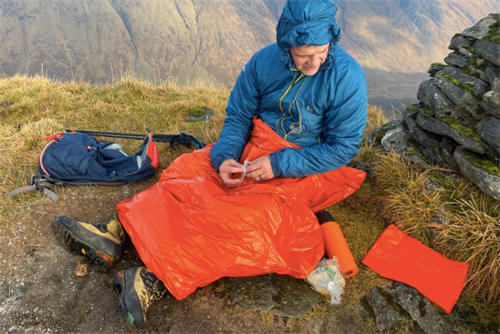
A space blanket—the classic, cheap, crinkly kind—is a thin sheet of metallised PET film, often called Mylar. It weighs about 50 to 85 grams (2–3 oz) and folds down smaller than a deck of cards. The idea is simple: the aluminium coating bounces some of your body's infrared radiation back at you.
A 2020 study by Kranebitter et al., published in the journal Coatings, evaluated the transmission and reflectivity of electromagnetic radiation through rescue blankets. The research found that standard rescue sheets transmit between 1% and 8% of visible light, and about 1% of ultraviolet B radiation (280–315 nm), while reflecting the infrared wavelengths that carry body heat. Those numbers are real—but they come from a lab. Out in the field, wind, movement, and moisture all chip away at performance.
When a manufacturer says "reflects 80% to 90% of body heat," they're talking about radiant heat loss only. Your body loses warmth four main ways: radiation, convection (wind stripping heat away), conduction (contact with cold ground), and evaporation (sweat or moisture carrying heat away). Reflection tackles just one of those four paths.
And there's another problem. This film has virtually no loft, no real insulation. It's about as thick as gift wrap. A 2025 article by TSG Associates, a UK-based manufacturer of emergency medical equipment, explains bluntly that Mylar blankets "are ineffective at preventing heat loss through conduction, which is caused by a casualty's direct contact with the ground." Lie on frozen ground with nothing but a space blanket under you, and the earth will pull heat out fast. The blanket barely touches that problem.
A bivvy bag is a different animal. It's not a flat sheet. It's a sealed sack you climb into. Take the SOL Emergency Bivvy from Adventure Medical Kits as a reference point. According to specifications listed by UK outdoor retailer Ultralight Outdoor Gear, it weighs 106 g (excluding stuff sack), uses metalised polyethylene, and packs down smaller than a 12 oz soda can. It's noticeably thicker and more tear-resistant than Mylar. The drawstring closure and taped seams block convection dramatically—wind can't blow straight across your skin. And because the material has some substance, it provides at least minimal separation from cold ground. Not a lot—don't throw away your sleeping pad—but more than a paper-thin sheet.
Then there are upgraded versions. The SOL Escape Bivvy uses a non-woven, breathable fabric with a metalised coating, weighing 8.5 oz (about 241 g) according to product pages on UK retailer Outdoor Insight and Australian retailer Wild Earth. It reflects about 70% of body heat and is designed to let moisture escape through microscopic pores while keeping rain and wind out. Higher up the price ladder, the Outdoor Research Helium Bivy uses Pertex Shield Diamond Fuse waterproof-breathable fabric and weighs roughly 448–494 g (15.8–17.4 oz), depending on the model year—a 2025 review by Live for the Outdoors measured it at 494 g, while retailer All-Outdoor-Outfitters lists it at 448 g. That one is closer to a minimalist planned shelter than a pure emergency backup.
Don't let "reflects 90% of body heat" fool you
Those numbers sound convincing, but they only address radiant heat. When the wind picks up and the ground is freezing, convection and conduction become far bigger threats.
A 2022 study by Dvir et al., published in the Emergency Medicine Journal, tested 10 antihypothermia devices—five active and five passive, including a sleeping bag, a space blanket, and a wool blanket—using a torso model of four fluid bags preheated to 36°C. The tests ran for up to 480 minutes at two ambient temperatures: 20°C (68°F) and 8°C (46°F). At 8°C, the study found that "none of the tested devices increased the temperature" of the model. In fact, at 20°C, the space blanket—along with most other passive devices—"did not prevent heat loss beyond 30 min". The takeaway is stark: these devices can slow cooling, but they don't warm you. If you're already hypothermic and your body's heat production has dropped, passively reflecting a tiny amount of radiation won't turn things around.
Then there's the whole business of breathability. Classic Mylar blankets and some basic bivvies are totally vapour-tight. Seal yourself in, and moisture from your skin and breath has nowhere to go. It condenses on the inside. Near freezing temperatures, damp clothes make you feel much colder—and that can cancel out whatever small benefit the reflective layer provides.
This is exactly why breathable bivvy bags appeared. They trade away some reflectivity—typically dropping from around 90% to about 70%—and in exchange, they manage moisture better. Users on outdoor forums commonly report noticeably less clamminess with breathable models. It's a genuine trade-off: more reflection, or drier air. Neither is automatically better. You just need to know which compromise you're making.
Weight, bulk, and the battle over a hundred grams
Here's what the numbers look like on paper:
Standard Mylar space blanket: roughly 50–85 g (2–3 oz), packs to the size of a deck of cards, costs a few dollars.
Basic emergency bivvy (SOL Emergency Bivvy): 106 g, per Ultralight Outdoor Gear's product specs.
Breathable bivvy (SOL Escape Bivvy): 241 g (8.5 oz), according to multiple retailers including Outdoor Insight and Wild Earth. (Note: some earlier models without the hood were listed around 156 g; the current Escape Bivvy spec is 8.5 oz.)
Waterproof-breathable bivvy (Outdoor Research Helium Bivy): 448–494 g, depending on model year and measurement source.
The decision here is personal. If you're counting every gram and a hundred of them bothers you, a space blanket does at least give you a reflective layer. Something is better than nothing.
But there's a physical reality that doesn't get talked about enough: a blanket is a flat sheet. You can wrap it around yourself as best you can, but sealing off the neck, the feet, the sides against moving air—that's nearly impossible. A bivvy bag forms a closed microenvironment. That difference alone shows up repeatedly in comparative gear reviews.
For a day hike or a quick overnight trip, carrying a basic bivvy in the 100-gram range doesn't ask much of your pack weight. But if you end up needing it, it offers a lot more than a flapping sheet. If you're doing fast-and-light overnight trips where you plan to sleep out, a breathable bivvy might make sense—you just have to accept the extra grams and the higher price. And that nearly 500-gram Helium Bivy? That's more of a planned shelter choice than a "just in case" emergency item. Carrying it as a pure backup would feel heavy for most people.
Durability and reusability: the gap gets big here
This is where the two product categories really diverge.
A cheap Mylar space blanket, after catching on a rock or branch, tears fast. And once a rip starts, it spreads. People on hiking forums often describe this stuff as essentially single-use. On rough ground, not tearing it is the exception, not the rule.
Polyethylene-based products—not just bivvies, but also some heavier-duty blankets—hold up much better and can handle multiple uses. Even a basic emergency bivvy is tougher than Mylar from the start. Treat it with a bit of care and you can reuse it several times.
The waterproof-breathable bivvies are designed for longer lifespans, though they need proper care to keep the membrane working—they're not the kind of thing you shove in the bottom of your pack and forget about for a year. The point isn't about being frugal; it's about what happens when you actually need to rely on the thing. If your emergency gear has already developed a silent tear, it might as well not be there.
The multi-use argument: blanket versus bag
One common pitch for space blankets is that they do more than one job. You can use them as a ground sheet, a sun shade, a signal mirror, an improvised tarp. The Kranebitter study even notes that rescue blankets provide some protection from snow blindness by blocking roughly 99% of UVB radiation, while still transmitting enough visible light to see through.
But here's what often goes unsaid: a bivvy bag can usually be opened flat and used like a blanket, too. Some are even designed to be reversible. The reverse transformation—turning a small, flat blanket into something that seals around your whole body and blocks drafts—is significantly harder. In a real survival situation where you have to hunker down and wait, what you need most is something you can get inside and stop losing heat. A bag-shaped object does that more directly than a rectangle of film.
What to pick for different kinds of trips
These suggestions aren't hard rules—they're patterns drawn from the research, product characteristics, and widely shared experience across the hiking community. Conditions, personal metabolism, and gear combinations all change the equation.
Day hikes and fast traverses: A basic emergency bivvy (around 100 g) usually hits the sweet spot. It's light, sealable, and a much more complete shelter than a flat blanket.
Technical climbs or alpine routes: Consider a breathable or waterproof-breathable bivvy (200 g and upward). You might be stuck in an exposed spot longer, and moisture management starts to matter a lot for staying warm overnight.
When every gram counts: A space blanket still has a role—but probably not as your only backup. Some experienced hikers carry a basic bivvy as their primary emergency shelter and stash a few ultralight Mylar blankets in different pockets as a redundancy layer. Layered emergency gear, layered thinking.
Car kits and home emergency bags: Toss in several cheap space blankets alongside one bivvy. It's minimal cost for flexible options.
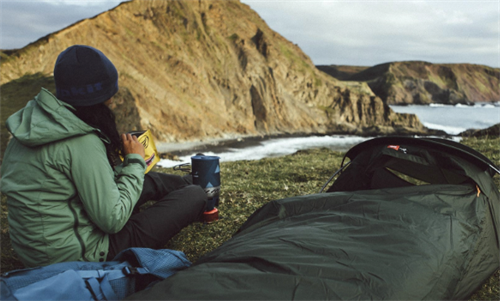
A bivvy bag isn't a magic shield
A few things need saying outright, even if they're less fun than spec comparisons.
First, no reflective emergency shelter replaces a sleeping pad. The barrier between you and the ground often matters more than what you wrap around yourself. The TSG Associates article notes that insulating the casualty from the ground—using a mat, extra clothing, or natural materials—is critical because a foil blanket "simply does not work very well in this context as an insulation layer". If you don't have a pad, put your pack under your torso or pile up leaves and pine needles.
It makes a real difference.
Second, knowing how to pick your spot counts as much as the gear itself. Using natural rock walls as windbreaks, finding depressions out of the airflow, letting shrubs slow the wind—these are the skills that make emergency equipment work. No product spec sheet can teach them.
Third, gear specs change. Manufacturers update their products, and all data mentioned here is based on publicly available information as of May 2026. Before buying, check the product page for current specs. Prices fluctuate too—the ballpark figures in this article help with comparison, but your local retailer's number is the one that counts.
FAQ
Q: Can I survive a night in the mountains with just a space blanket?
If the weather is mild, the wind is calm, the ground isn't too cold, you're not already hypothermic, and you've put something under you for insulation—maybe, for a few hours. In near-freezing temperatures with wind or precipitation, relying on a reflective sheet alone is risky. Research suggests that passive Mylar blankets lose effectiveness rapidly once conduction and convection become significant. It's a "better than nothing" last resort, not a plan.
Q: Will I be warmer if I put a bivvy bag inside my sleeping bag?
It's tricky. A fully sealed bivvy used inside a sleeping bag can trap moisture and dampen the bag's insulation over time. A more common approach, when your sleeping bag's temperature rating is marginal, is to put the bivvy on the outside—ideally a breathable one with some ventilation left open. A totally sealed bivvy isn't designed for extended layering of this kind.
Q: Are breathable bivvies always the better choice?
It depends on your main use case. If you need something that doubles as a planned overnight shelter, breathability is a genuine upgrade for moisture control and comfort. If it's exclusively a pack-bottom emergency item you hope never to use, breathability might not be your top priority. Consider whether the drop in reflectivity and the higher price are worth it for your situation.
Q: I only want to carry one. Which should it be?
If your mindset is "put it in the bag, forget about it, and hope I never need it," a basic emergency bivvy is the safer bet for most mountain hiking scenarios. The sealed bag design and tougher material simply offer a wider margin of safety. A space blanket works better as a supplementary backup, or for low-risk conditions where the weight penalty needs to be essentially zero.
References
[1] Kranebitter H, Wallner B, Klinger A, Isser M, Wiedermann FJ, Lederer W. Rescue Blankets—Transmission and Reflectivity of Electromagnetic Radiation. Coatings. 2020;10(4):375. doi:10.3390/coatings10040375. — Source for rescue blanket optical transmission and UV reflectivity data.
[2] Dvir E, Epstein D, Berzon B, Raz A, Lehavi A. Differences in the Thermal Properties and Surface Temperature of Prehospital Antihypothermia Devices: An in Vitro Study. Emergency Medicine Journal. 2022;39(11):833–838. doi:10.1136/emermed-2020-211057. — Source for the in vitro comparison of passive warming devices including space blankets.
[3] TSG Associates. Why Mylar Blankets Fall Short in Hypothermia Treatment. Published July 2025. https://www.tsgassociates.co.uk/news/item/mylar-blankets-fall-short-in-hypothermia-treatment — Source for Mylar blanket limitations regarding conduction, moisture, and durability.
[4] Ultralight Outdoor Gear. SOL Emergency Bivvy with Rescue Whistle — Product Specifications. https://ultralightoutdoorgear.co.uk. — Source for SOL Emergency Bivvy weight and packed size.
[5] Outdoor Insight. SOL Escape Bivvy — Product Specifications. https://www.outdoor-insight.co.uk/gear/sol-escape-bivvy-5/ — Source for SOL Escape Bivvy weight (8.5 oz) and breathable fabric description.
[6] Live for the Outdoors. Outdoor Research Helium Bivy: Our Long-Standing Favourite. Updated July 2025. https://www.livefortheoutdoors.com. — Source for OR Helium Bivy weight (494 g) and materials specification.
Disclaimer
The information in this article is for outdoor safety education and gear reference only. It does not constitute professional medical or survival advice. Product specifications mentioned are based on publicly available materials as of May 2026 and may change as manufacturers update their products. In the field, the effectiveness of emergency shelter equipment depends heavily on environmental conditions, user experience, and correct usage. Readers are advised to understand any gear's limitations and to practise using it in controlled conditions before relying on it in a real emergency. The author has no commercial affiliation with any brands or products mentioned.
Recommend for you:
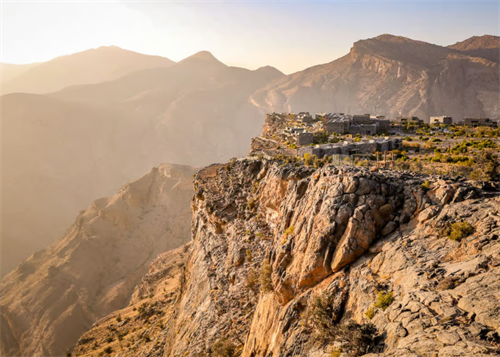
Trekking Oman's Hajar Mountains: Canyons and Ghost Villages
In northern Oman, under the shadow of limestone cliffs, there are stone villages where half the roofs have caved in. They don't show up on the main pages of most conventional guidebooks.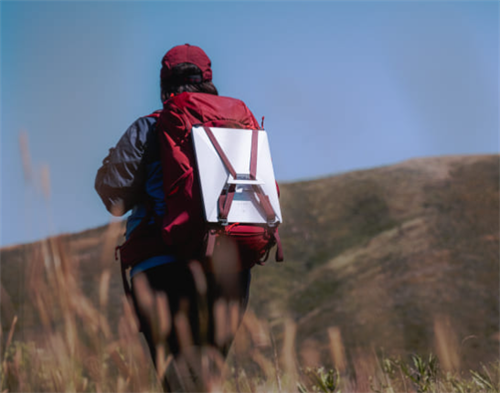
First Hikers Using Starlink: What High-Speed Internet Does to the Wilderness Experience
In June 2024, SpaceX launched the Starlink Mini. It weighs 1.1 kg (2.43 lbs), according to SpaceX’s official specifications page, or 1.53 kg (3.37 lbs) with its 15-meter DC power cable and kickstand—and it fits in a backpack.
"Wearable Coach": Can a Smartwatch Really Replace a Mountain Guide?
You've probably noticed it. Over the last few years, the way outdoor watch brands talk about their stuff has changed. It used to be about tracking—distance, elevation, heart rate.
Tajikistan’s Fann Mountains: An Untouched Trekker’s Dream
For hikers who have already done a hut-to-hut traverse in the Alps or a few standard circuits in Nepal, the question of where to go next is shifting.