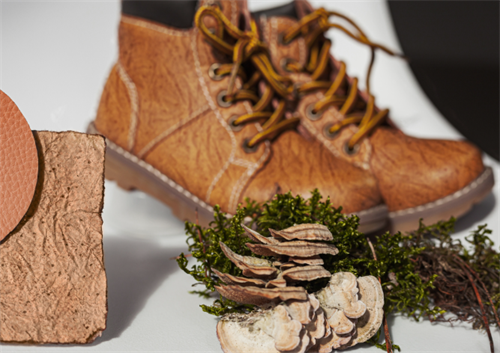
Mycelium-Based Gear: How Mushrooms Are Becoming the Future of Hiking Equipment
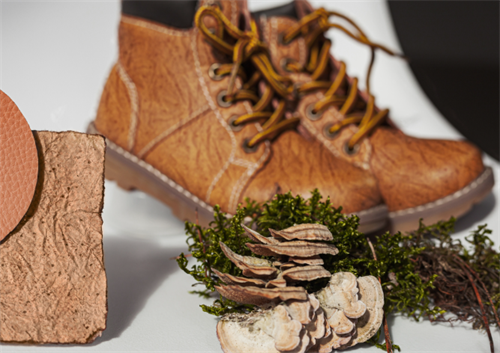
By Michael J. Reynolds|Estimated reading time: 11–13 minutes|Last updated: May 8, 2026
Author Background: Michael J. Reynolds is a technology and outdoor systems writer covering the intersection of hiking, mobility, wearable devices, and emerging expedition technologies. His articles examine how developments such as satellite communication, AI-assisted rescue systems, advanced materials, and portable energy solutions are beginning to influence outdoor travel and backcountry safety. He is particularly interested in the practical impact of technology on self-supported trekking and wilderness experiences rather than speculative marketing claims. His work combines industry reports, product research, and long-form analysis to explore how outdoor equipment and mountain travel may evolve over the coming decade.
By 2026, mycelium leather isn't just a lab curiosity anymore. According to a January 2026 trend report from BSL Association, a material-watch group, this stuff is moving into luxury goods, athletic footwear, and performance categories—with real commercial intent behind it. For hikers who already know their layering systems and have opinions about pack weight, a pretty practical question is starting to surface: can something grown from fungus actually hold up in the mountains?
There's a lot of language floating around right now—"100% bio-based," "biodegradable," "renewable." Some of it is meaningful. Some of it needs a closer look. This article pulls together what the research actually says, so you can sort fact from expectation when you're thinking about gear upgrades. The most visible example on the market right now is the Merrell Moab 3 collaboration with Parks Project. The upper uses a material called HyphaLite™, which Merrell describes as 100% bio-based, biodegradable, and renewable. This isn't a concept shoe. You can buy it and take it on trail.
Mycelium Shows Up in Three Different Forms
Before getting into performance, one thing needs untangling: when outdoor brands say "mycelium material," they're not always talking about the same thing. Based on what's publicly known so far, there are at least three distinct forms. They're suited to completely different uses, and what you can reasonably expect from each varies a lot.
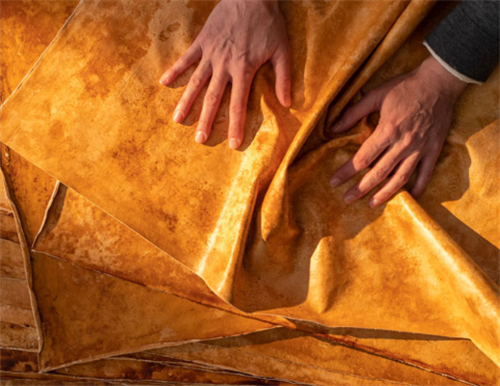
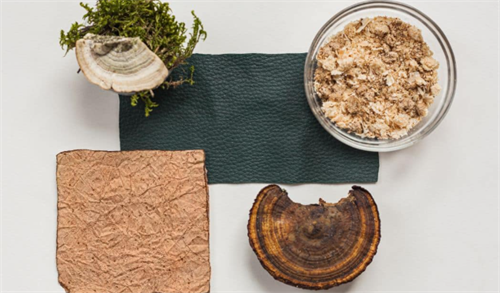
First, mycelium "leather." This is the one that feels closest to animal leather—supple, flexible, used for shoe uppers, backpack panels, gloves. It's grown as a sheet of mycelium, then deactivated, compressed, and finished until it has a hand feel similar to hide. Market research firm Global Info Research put out a report in February 2026 estimating the global mycelium leather market at around $23.05 million in 2025. Tiny, sure, but the growth curve is steep.
Second, mycelium composites. These are a different animal entirely. Made by letting mycelium bind with agricultural waste—sawdust, hemp stalks, that kind of thing—the result is rigid, not flexible. Think tent stakes, insulating pads for cookware, protective packaging. Nobody's expecting these to feel nice. The point is light weight and moldability.
Third, mycelium non-woven textiles. This is the one that gets closer to what you'd recognize as softshell fabric. It's mostly still in labs or small pilot runs. When it'll actually show up in gear shops is anyone's guess.
So when you come across a piece of mycelium gear, figuring out which category it falls into matters more than whatever name the brand slapped on it. Strength, water resistance, durability—the differences between these types can be big.
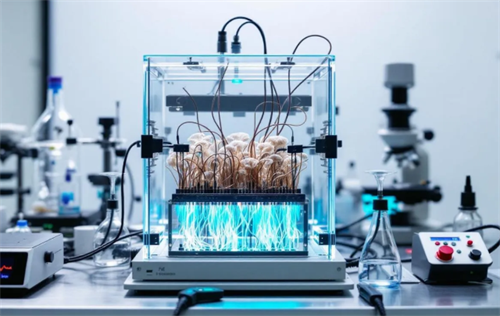
Why Is This Happening Now? Three Things Pushing It Forward
Mycelium didn't suddenly get everywhere in outdoor conversations in 2026 because of one breakthrough. A few things are pushing at once.
Regulation is part of it. The EU's Digital Product Passport rules are nudging brands toward disclosing environmental footprints. BSL Association's analysis notes that mycelium leather scores well in these disclosures—low impact, easy traceability. For any outdoor brand selling into Europe, that's a financial incentive, not just marketing fluff.
Sustainable consumption isn't fringe anymore. Stratistics MRC, a market research outfit, estimated in late 2025 that the global mycelium leather market was valued around 53.1millionin2025,withapossibletrajectoryto53.1millionin2025,withapossibletrajectoryto226 million by 2032, growing about 23% annually. Meanwhile, another firm, QYResearch, published numbers in 2026 that look quite different: 22millionin2025,projectedtohit22millionin2025,projectedtohit297 million by 2032, with a 45.3% growth rate. The fact that two reports diverge this much tells you something—this market is still young, and consensus hasn't formed. Read these as directional signals, not precise forecasts.
Big brands are placing bets. Ecovative's Forager brand is pushing a mycelium leather called AirLoom™. They claim a nine-day growth cycle and roughly half the carbon footprint of traditional leather. PVH (the parent of Calvin Klein and Tommy Hilfiger), Vivobarefoot, and Veja have all reportedly shown interest. MycoWorks is commercializing its Reishi™ material and, by its own disclosure, has a factory capable of turning out 5,000 sheets a day. Strategic clients are expanding.
That said, walk into an outdoor retailer and try to find mycelium gear you can actually identify. The list is still very short. Most of the applications are focused on accessories and everyday items, rather than the highly durable professional gear that hiking enthusiasts need.
Performance: What Lab Data Can and Can't Tell Us
This is the part hikers care about most. It's also the part that demands the most restrained reading.
Start with strength. Academic studies have produced specific numbers, but they come from particular strains and particular processes. Change either, and the numbers might shift.
A 2026 paper on ScienceDirect reported that mycelium leather grown from Ganoderma fungi, reinforced with Tencel fabric, hit a tensile strength of 8.47 MPa. Other research using dialdehyde carboxymethyl cellulose crosslinking claimed to multiply the strength several times over. One frequently cited industry comparison puts mycelium leather's tensile strength at around 17 MPa—sitting between animal leather at roughly 20 MPa and standard synthetic leather down at just 2.2 MPa. In plain terms: it's way tougher than fake leather and gets surprisingly close to the real thing. But those are lab benches, not five years of scree and weather.
Now, moisture. This might be the biggest variable for actual outdoor use.
Leather goes soft when wet, turns stiff when dry. Mycelium seems to share some of that behavior. A 2024 study in ACS Applied Bio Materials used ultrasonic pulse transmission and uniaxial tensile testing to examine how humidity affects the elastic properties of mycelium leather. The findings: the material softened overall as it absorbed moisture, and the initial changes during absorption may be irreversible—possibly linked to additives used during production.
What does that mean on trail? A mycelium shoe upper that gets rained on might lose some structure. If you're on rough terrain where ankle support matters, that could be an issue. With something like the Merrell Moab 3 mycelium edition, though, the shoe also packs a Vibram® TC5+ outsole and a supportive collar structure. Don't pin all the blame—or credit—on the upper alone.
Coating progress is real, but it's not full waterproofing yet.
A 2024 study on ScienceDirect tested beeswax and coconut oil coatings on mycelium composites. At 80% beeswax content, water absorption dropped to 26.25%, with no fungal growth observed over 36 days. That tells us natural coatings can meaningfully improve water resistance—but we're not at "waterproof" yet. Another line of research explored using the mycelium's own hydrophobic proteins for coatings, achieving a water contact angle of 139°. That's edging toward superhydrophobic territory, like a lotus leaf. Still, this is proof-of-concept work, not something integrated into products hitting shelves.
Here's a detail easy to miss: some mycelium products labeled "water-resistant" rely on a coating to deliver that performance, not the material itself. Coatings wear down. When they do, the underlying material may soak up moisture again. Plan for multi-day rain or stream crossings? Weigh this carefully.
And what about weight?
Mycelium materials are naturally low-density, which gives them some theoretical appeal for gram-counters. Volkswagen, when testing mycelium for car interiors, noted the lighter weight helps cut carbon footprint. But in outdoor gear specifically? Systematic weight comparisons just aren't available yet. Merrell lists the Moab 3 mycelium edition at about 438 grams per shoe (15.44 oz). That number includes the Vibram outsole, midsole, and collar. Teasing out how much the mycelium upper alone contributes isn't really possible from publicly available specs. Treat "mycelium must be lighter" as a reasonable guess, not a confirmed fact.
What's Holding It Back:
Small scale, high cost. Stratistics MRC's report flags production and R&D costs as the number one barrier to wider adoption. Developing a commercially viable material demands biotech infrastructure, climate-controlled growing facilities, and a lot of testing. The costs stack up fast. Even with MycoWorks claiming 5,000-sheet daily output, that's still orders of magnitude below conventional leather and synthetic production volumes. For hikers, this means current mycelium products are positioned at the premium end. Whether they make sense as everyday gear replacements at current prices is unclear.
Many products quietly include a synthetic coating. Early mycelium products sometimes use a thin polyurethane layer for added abrasion resistance. BSL Association's report points out this undercuts the biodegradability story. Not everything waving a "mushroom" flag has identical environmental credentials. If sustainability matters to you, check for specifics: what percentage is actually mycelium, what's in the coating, and whether the brand has published anything about end-of-life handling.
Long-term outdoor data barely exists. This can't be said too many times. Nobody has carried a mycelium pack the full length of the Pacific Crest Trail and documented half a decade of weather exposure. Nearly all the strength, durability, and weather-resistance testing lives in laboratories, not in hailstorms at 11,000 feet. Until that changes, mycelium gear is better understood as a supplement, not a primary system you'd stake a trip on.
Color and finishing options are narrow. Mycelium takes well to earth tones naturally. Getting a bright safety orange or high-vis yellow requires more chemical processing, and that technology isn't mature. If you're traveling above the snowline, that constraint might actually matter.
What's Actually Available Right Now
The list of identifiable mycelium hiking products is short, but it's growing.
In footwear, the Merrell Moab 3 Parks Project collaboration is the most visible example. Beyond the HyphaLite™ mycelium upper, it incorporates recycled canvas (with 8% pineapple yarn), recycled laces, and a 25% recycled mesh footbed cover. Its existence tells us that mycelium uppers can reach a point where a major brand is willing to sell them commercially. Whether they hold up over long-term use is still being answered, one pair at a time, by the people wearing them.
Outside of shoes, Forager's materials and MycoWorks' Reishi are finding their way into gloves, small leather goods, and accessories. In the outdoor space, these remain mostly in accessories and lifestyle categories, not yet in high-abrasion structural pieces like packs or alpine boots.
If you're thinking about trying something, the most useful move is to check three things: the actual mycelium content, what the coating chemistry is, and whether the brand offers any independent durability data.
When to Consider It, When to Wait
This isn't a yes-or-no question. It depends on the kind of trip you're planning.
Dry-climate day hikes or short overnights? Mycelium gear might be totally adequate. But at similar prices, conventional materials usually come with longer, more predictable track records.
Multi-day routes with rain, snow, or repeated stream crossings? Until the long-term waterproofing story is more thoroughly tested, proven wet-weather performers are still the safer bet.
Starting with accessories might be the smarter entry point. Stuff sacks, camera inserts, lightweight tabletops—these don't demand the same mechanical strength or water resistance, so the risk of disappointment is lower.
If environmental impact ranks high on your priority list, mycelium's carbon and biodegradability advantages are backed by multiple sources. Just make sure you understand the gap between "pure mycelium is biodegradable" and "this coated composite product will actually break down."
One last thing to keep in perspective: most mycelium gear is still early-commercial. Product lines are narrow, long-term user reports are scarce, and standardized testing methods haven't settled yet. On trips where you're relying on your gear for safety, mycelium fits better as backup rather than primary. That might change. But in 2026, that's where things stand.
Where Things Could Go in the Next Few Years
What follows is extrapolation from current trends, not a prediction set in stone.
Strain engineering might unlock real performance jumps. Biotech firms are developing mycelium varieties with specific traits—more tensile strength, better flexibility, inherent water resistance, flame retardancy. If even one or two of these commercialize successfully, the range of applications could widen noticeably.
Coating technology is advancing. Whether it's hydrophobic proteins or natural wax systems, the technical path toward non-petroleum water barriers seems viable. Whether it arrives at a price and durability that makes sense for outdoor gear is still an open question.
Costs will probably come down. The timeline is fuzzy. Multiple industry reports suggest adoption will accelerate after 2026, but how fast depends on scaling. For most hikers, the real inflection point comes when mycelium stops being the "sustainability premium" and becomes a performance-and-price peer to conventional options.
Repairability is still a blank box. Hiking gear takes abuse that lifestyle products never see. Whether a torn mycelium panel can be field-repaired, and what responsible end-of-life processing looks like, will matter enormously for long-term credibility in the outdoor world. Right now, almost nobody is talking about this publicly.
FAQ
Q: Will mycelium gear actually biodegrade in the wild?
Depends on what's in it. Pure mycelium can biodegrade. But if the product includes a polyurethane coating or synthetic binders, full degradation isn't guaranteed. Before buying, check whether the brand has published a full materials disclosure and degradation conditions.
Q: What about grip on wet rock?
Current mycelium products are used in uppers, not outsoles. The Merrell Moab 3 mycelium edition uses a Vibram® TC5+ rubber outsole—same as the non-mycelium version of the shoe. Wet-rock traction comes from the outsole compound, not the upper. The thing to keep an eye on is how the upper holds up when it's persistently wet.
Q: How do I tell real bio-based innovation from marketing fluff?
Look for a few things: the actual percentage of mycelium content, the coating chemistry disclosed, any third-party testing or certification (like OEKO-TEX® STANDARD 100), and whether the brand offers end-of-life guidance. If the marketing leans hard on "mushroom" imagery while staying vague on specifics and standards—that's a signal worth noticing.
Q: Is mycelium gear more expensive?
Currently, yes. Limited production scale and an immature supply chain push prices above comparable conventional products. As capacity expands—MycoWorks' 5,000-sheet-per-day facility, for instance—costs should trend downward. Near-term price parity isn't something to count on yet.
Q: Does it need special care?
No universal standard exists. Given the material's nature, avoiding prolonged soaking is probably wise, and periodic surface maintenance—think along the lines of leather conditioning—might help. Follow whatever the specific brand recommends. If there's a surface coating involved, keeping that intact could be a big part of extending the product's life.
References:
[1] BSL Association. Mycelium Leather: How Grown Materials Are Redefining the Future of Leather Alternatives. January 2026. https://bslassociation.com
[2] Global Info Research. Global Mycelium Leather Market 2026 by Manufacturers, Regions, Type and Application, Forecast to 2032. February 2026. https://www.reportsandmarkets.com
[3] Karunarathne, A., et al. "Effects of Humidity on Mycelium-Based Leather." ACS Applied Bio Materials, 2024; 7(10): 6441–6450. https://pubmed.ncbi.nlm.nih.gov/39383329/
[4] Stratistics Market Research Consulting. Mycelium Leather Market Forecasts to 2032. 2025. https://www.giiresearch.com
[5] Effect of Beeswax and Coconut Oil as Natural Coating Agents on Morphological, Degradation Behaviour, and Water Barrier Properties of Mycelium-Based Composite. ScienceDirect, 2024. https://www.sciencedirect.com
[6] QYResearch. Mycelium Leather: Global and Chinese Overseas Business Planning and Strategy Research Report for 2026. 2026. https://dxpress.gelonghui.com
Disclaimer
This article is for informational and educational purposes only and does not constitute purchase advice or product recommendations. Mycelium-based outdoor gear is a rapidly evolving space. The performance data and market figures cited were valid at time of publication but may change. The author has not personally tested any specific product mentioned. Hikers should consult the latest product documentation and independent reviews, and evaluate gear choices against the specific conditions of their trip—climate, altitude, distance, technical difficulty included. The author assumes no responsibility for purchase decisions made or issues encountered in the field based on the information presented here.
Recommend for you:
"Wearable Coach": Can a Smartwatch Really Replace a Mountain Guide?
You've probably noticed it. Over the last few years, the way outdoor watch brands talk about their stuff has changed. It used to be about tracking—distance, elevation, heart rate.
What Kind of Gloves Work Best for Pre-Dawn Starts and Climbing?
High-altitude climbs that kick off before dawn throw gloves into a temperature roller coaster that can swing tens of degrees in just a few hours.
Emergency Bivvy Bags: Space Blankets vs. Ultralight Bivvies
Look at any hiking gear list and you'll see emergency shelter mentioned somewhere.And almost always, the conversation splits in two directions. On one side, the space blanket—so light you forget it's there, cheaper than a coffee.
How 3D-Printed Trail Food Might Change Your Backcountry Cooking Menu
Backpacking food hasn’t changed much in decades. You’ve got freeze-dried pouches, energy bars, oatmeal, nuts with chocolate. They pack calories, weigh little, and last forever. But exciting? Not really.