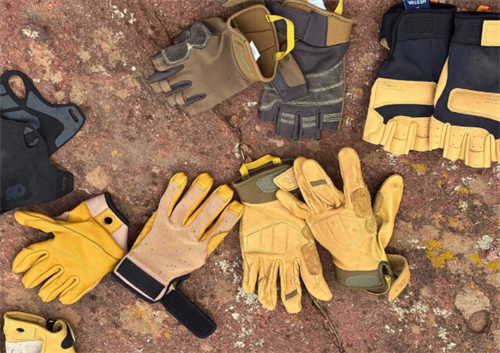
What Kind of Gloves Work Best for Pre-Dawn Starts and Climbing?
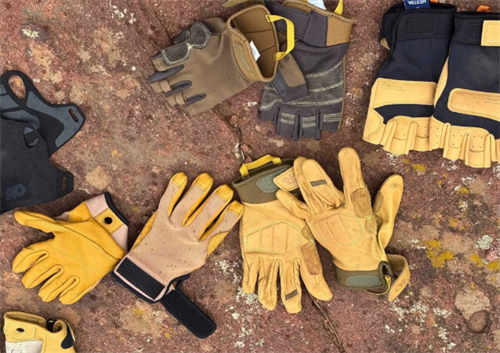
By Mark R. Vance|Release date: May 9, 2026 | Reading time: 11–13 min
Author Background: Mark R. Vance writes about hiking equipment, backpacking systems, and mountain safety practices. His work focuses on how gear performs in real-world trail conditions, especially on long-distance routes, rocky terrain, and cold-weather hikes. Rather than concentrating on product marketing, he analyzes practical trade-offs involving weight, durability, comfort, and reliability. His articles often explore footwear systems, layering strategies, navigation tools, and emergency preparedness for independent hikers. Drawing from years of trekking experience and outdoor research, he aims to explain technical outdoor topics in a clear and accessible way for both newer hikers and experienced backpackers.
High-altitude climbs that kick off before dawn throw gloves into a temperature roller coaster that can swing tens of degrees in just a few hours. You start in the frozen stillness of an alpine night, push into the heat your body generates during hard morning movement, then face gusty ridgeline winds that hit in unpredictable bursts.
A glove doesn't just need to keep your hands warm. It has to manage moisture, preserve dexterity, and somehow stay in sync with your body's shifting thermal rhythm.
There's no shortage of spec sheets and marketing claims out there. But the crossover point — where serious insulation for those early static hours meets the need to vent sweat and grip tools precisely — doesn't get discussed nearly enough. This piece pulls apart the logic of fibers, membranes, and zoned insulation, and tries to build a framework climbers in North America and Europe can adapt to different routes.
What Your Hands Actually Go Through During a Pre-Dawn Climb
Heat Loss When You're Standing Still
In the dark, while you sort gear or grip a cold ice axe, conductive heat loss hits harder than many climbers expect. Once skin temperature drops to around 10°C, peripheral blood vessels are already near-maximally constricted, as detailed in Van Tilburg's Handbook of Wilderness Medicine (AdventureMed, 2017).
The body does have a protective reflex called the hunting response — roughly every five to ten minutes, vessels briefly dilate to send a pulse of warmth to the fingers. But Van Tilburg notes this mechanism varies significantly between individuals, shaped by genetics and acclimatization. During these static moments, a glove's passive insulation becomes the only thing holding back rapid cooling.
Heat Production and the Sweat Problem
As your core heats up, your hands sweat — sometimes heavily. The real danger starts when moisture gets trapped inside glove layers. Pause for a rest, and evaporative cooling pulls heat out of your hands fast.
According to the same Handbook of Wilderness Medicine, when skin temperature reaches approximately -4°C, ice crystals begin forming inside tissue, causing direct cellular damage. On an active climb, keeping hands dry isn't a comfort issue — it's frostbite prevention at the most fundamental level.
Wind Chill Compounds Everything
Wind doesn't just make it feel colder. It actively compresses insulation layers and strips away the warm air boundary next to your skin. The U.S. National Weather Service's wind chill index (accessible via weather.gov) shows that at -18°C with a 24 km/h wind, exposed skin can freeze within minutes.
What that means in practice: a glove with decent static insulation becomes functionally useless if wind cuts straight through. A reliable wind barrier isn't optional. Without it, everything else in the system falls apart.
Building the Glove Layering System
Liner Gloves — Your Second Skin
Liners often get treated like an afterthought, but they're the real moisture-management workhorse of the system.
Merino wool liners commonly range from about 135 g/m² to 290 g/m². On routes where you're moving hard and need fine finger control, something in the 100–150 g/m² range — such as the 135 g/m² merino-polyester blend used in Norrøna's lighter liner models, per their public product specifications — offers a usable balance of wicking and precise fit. When facing long pre-dawn hours of near-inactivity, thicker 190 g/m²+ liners like those from Decathlon's MT500 range bring meaningful extra warmth.
There's a detail spec sheets rarely emphasize: any "+3°C of added warmth" claim only holds up if the liner isn't compressed. Jammed too tightly inside your main glove, blood flow gets restricted and heat loss accelerates. Fit between layers isn't just about comfort — it affects circulation directly.
Main Gloves — The Insulation Core
This is where material choices get genuinely complicated. Industry data compiled by suppliers indicates that Primaloft Gold retains a good portion of its thermal performance even when damp while staying light and compressible. Down remains unmatched for warmth-per-gram in static conditions, but its vulnerability to sweat-soaking during active climbing is well documented in backcountry skiing and mountaineering literature.
A practical design trend worth noting is zoned insulation. Some manufacturers now use a split approach — 200-gram fill over the back of the hand, tapering to 133 grams on the palm. This keeps your grip more precise while increasing overall thermal resistance, though independent testing comparing brands isn't widely available yet.
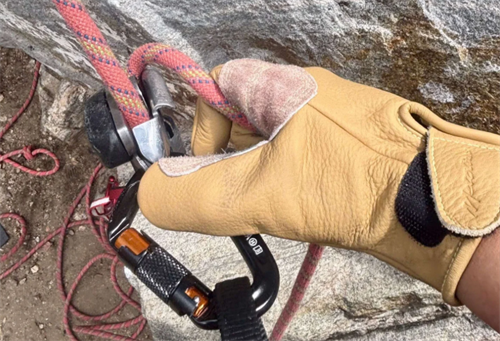
When checking for dexterity, making a fist in the shop tells you almost nothing useful. Bring a carabiner or an ice axe shaft. Can you thread and lock it one-handed with the gloves on? Some brands internally use a 1-to-5 dexterity scale borrowed from industrial work-glove testing, where 5 means near-bare-hand agility — but these ratings are self-assessed and vary between manufacturers. There's no widely adopted independent lab standard for climbing-glove dexterity yet.
Waterproof-Breathable Shells — The Most Misunderstood Layer
Trusting a waterproof-breathable membrane blindly leads to disappointment more often than not.
Technologies like OutDry bond the membrane directly to the outer fabric, eliminating the gap between layers where water can pool and add weight. A 2025 overview from Rad Sourcing, a textile industry resource, describes how this laminated construction reduces the "wet-out" effect compared to traditional hanging-liner designs.
That said, in sub-zero environments, a lot of outdoor literature points toward a practical truth: a sturdy softshell with an effective DWR treatment often traps less internal condensation than a fully waterproof membrane, at lower weight. Membrane gloves earn their place in persistent wet snow or rain — just don't assume they're automatically the best choice for drier, colder conditions.
For many climbers on many routes, the shell glove spends most of its life stuffed in a pack, waiting for a sudden storm or whiteout. It's the emergency layer you hope never to fully deploy, but definitely need to carry.
Small Details That Make or Break a System
Wrist Seals and Drawcords
The way a glove closes at the wrist controls how much warm air stays inside. A long gauntlet tucked under a hardshell cuff creates a tighter seal against wind. An over-the-cuff design is faster to pull on and off, which helps on technical ground with frequent stops and starts.
A one-handed drawcord sounds like a minor feature until you're gripping an axe with the other hand and a sudden gust hits. In that moment, a simple cord you can pull with your teeth or one hand becomes surprisingly valuable.
Leashes and How Not to Lose a Glove
Pull a glove off on a ridge with anything above 30 km/h winds, and it can vanish in seconds. Most basic wrist leashes handle this reliably. Modular carabiner-based systems offer more flexibility, but whatever design you use, test it while wearing your thickest gloves and with cold, stiff fingers.
If you can't operate the clip one-handed in conditions close to what you'll face, the system probably won't help when it matters most. This sounds obvious, but it's a common failure point in the field.
Drying Out Overnight
Damp gloves in a tent dry painfully slowly. The old trick of sleeping with thin liners inside your mid-layers, using body heat to evaporate moisture overnight, does work — but it needs caution inside a down sleeping bag. Wicking moisture into the bag's insulation night after night will degrade loft and warmth over time, a point reinforced in O'Bannon and Clelland's Really Cool Backcountry Ski Book (Falcon Guides, 2016).
And never shove a wet outer glove straight into the bottom of your pack at night. Putting on a cold, damp shell at dawn pulls heat from already-cold hands instantly and sets a rough tone for the whole day.
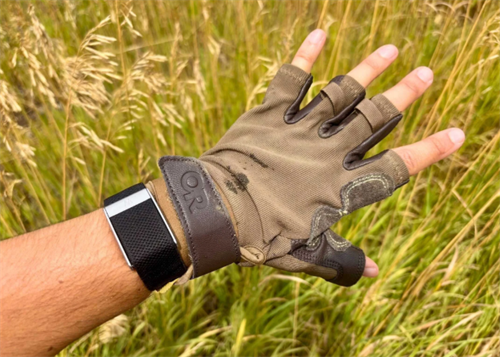
Example Glove Plans for Two Different Routes
A 4000m Alpine Rock Ridge
Think of the Hörnli Ridge on the Matterhorn. Most of the route involves rock scrambling. The last 200 to 400 meters may require crampons depending on snow conditions, and altitude-related temperature shifts compound the usual pre-dawn chill.
Dexterity rules here. For warmer sections, many climbers get by with a thin liner or softshell glove alone for rope handling. In colder, wind-exposed morning stretches, a lightweight synthetic insulated glove comes out. The standard approach is a two-glove combination switched as conditions evolve — not a single do-it-all solution.
A Winter Pre-Dawn Approach in the North American Rockies
Take the South Spur route on Mount Adams in Washington. You start in the dark on loose volcanic rock, often with damp fog and frozen ground. Temperatures at the trailhead can sit well below freezing through the early hours.
Mittens often make sense for that deep, immersive warmth before dawn. But once you reach the snow line around 2,530 meters (roughly 8,300 feet) and need to handle an ice axe or adjust poles, switching to more dexterous gloves becomes necessary. These routes reward carrying options and actively planning for the temperature shift that hits near sunrise.
FAQ:
My hands sweat heavily. What should I do?
Swap liners. Bring two or three thin pairs of merino or synthetic liners, rotate through them during the climb, and clip damp ones to your shoulder strap or tuck them inside your jacket to dry from body heat. No single glove, no matter how breathable it claims to be, manages persistent heavy sweat as reliably as simply switching to a dry liner.
Can I just use a super-thick ski glove instead of layering?
That rarely works in alpine conditions where temperature and activity levels shift dramatically. Once you sweat into a thick glove, the insulation wets through and becomes a cold, damp oven mitt for the rest of the day. You also lose nearly all the fine control needed for buckles, ropes, and tools. Layering exists to let you regulate heat and dexterity as conditions change.
Mittens or gloves?
Mittens keep you warmer. Gloves let you do more. For the brutal cold of a pre-dawn start, mittens can genuinely save fingers from frostbite. Once technical climbing begins, most people switch to articulated gloves. Trigger-finger or lobster-claw designs split the difference but still lean toward warmth over precision. Knowing what the next hour demands makes the choice clearer.
Leather, softshell, or hardshell?
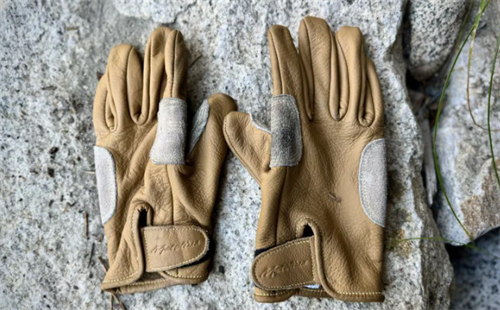
On the palm, where grip and abrasion resistance matter most, leather — especially goat leather — remains the standard. For the back of the hand, where flex and breathability count, softshell fabrics tend to fit and feel better. Fully waterproof hardshell materials earn their place only in persistently wet conditions. Many experienced climbers reach for hybrids: leather palm, softshell back, and a waterproof-breathable membrane sandwiched inside.
References
[1] Van Tilburg, C. (2017). Handbook of Wilderness Medicine. AdventureMed. (For frostbite mechanisms, thermal physiology of the hand, and the hunting response.)
[2] O'Bannon, A., & Clelland, M. (2016). Allen & Mike's Really Cool Backcountry Ski Book. Falcon Guides. (For multi-day drying routines and winter gear management strategies.)
[3] Twight, M., & Martin, J. (1999). Extreme Alpinism: Climbing Light, Fast, and High. The Mountaineers Books. (Foundational text on material management and alpine layering theory.)
[4] Rad Sourcing. (2025). Guide to OutDry Fabric. (Technical overview of OutDry membrane construction and wet-out resistance.)
[5] Science Insights. (2026). What Causes Frostbite? Cold, Wind, and Your Risk. (Accessible review of frostbite pathology and wind chill science for outdoor audiences.)
Disclaimer
This article provides general information only and does not constitute professional medical or outdoor safety advice. Alpine activities carry inherent risks that cannot be eliminated. Glove selection and use should always factor in current weather forecasts, route-specific assessments, and individual health conditions. The author and publisher assume no liability for any loss or damage arising from the use of this information.
Recommend for you:
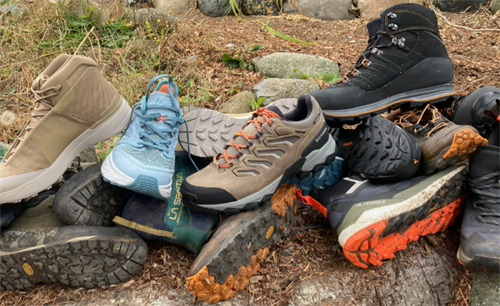
Mountain Loop Fastpacking: Trail Runners vs. Hiking Boots
Fastpacking a mountain loop—whether you're cranking out huge miles and vert in a single day, or moving light over two to four days—puts your footwear in a weird bind.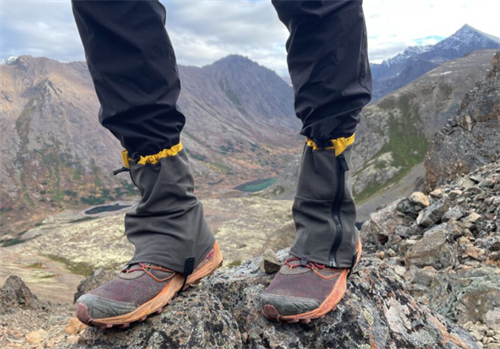
Gaiters: Are They Worth It on Rocky, Scree-Filled Trails?
When a hiker climbs from treeline into a high scree basin, a tiny decision starts to grow: gaiters or no gaiters.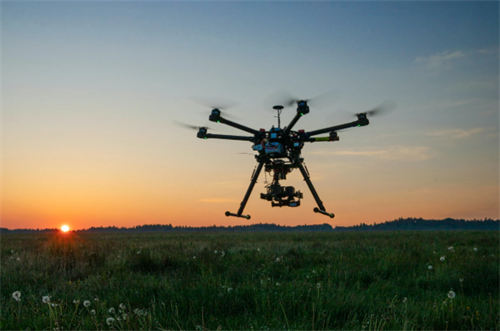
No More Missing Hikers? How AI-Powered Search-and-Rescue Drones Operate
Hikers go missing for reasons that sound almost mundane: a weather front rolls in faster than expected, someone loses the trail, a phone battery dies, and the last thread of contact snaps.
Canister Stove vs. Liquid Fuel Stove: Which Cooking System for High-Altitude Trekking?
When you're walking a ridgeline at 4,000 meters carrying a week of gear, choosing a cooking system isn't just about making fire — it's a quiet argument with physics.